

 Login
Login


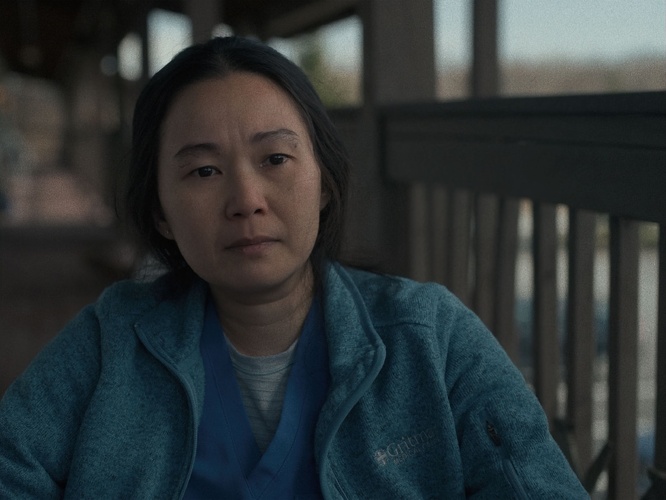
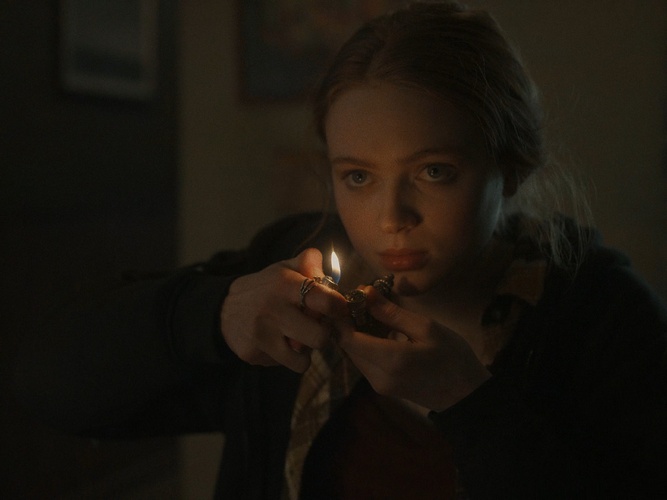
Charlie (Brendan Fraser) is a morbidly obese recluse who never leaves his Idaho apartment and teaches online writing courses to college students. His only friend, a nurse named Liz (Hong Chau), often checks in on him and brings him unhealthy food, but Charlie refuses to go to the hospital despite her desperate pleas and his rapidly declining health. Charlie soon encounters Thomas (Ty Simpkins), a missionary for New Life Church who becomes curious about the enormous man and hopes to bring him spiritual guidance in his final days. With Charlie soon expecting to die, he hopes to reconnect with his estranged teenage daughter, Ellie (Sadie Sink), whom he abandoned when he left his wife (Samantha Morton) to have a relationship with a student. Although Ellie is repulsed by her father because of his past actions, Charlie offers her a hefty inheritance if she spends time with him.
Reflecting its stage origins, The Whale takes place in a single location, a decision that turns the film into an emotional pressure cooker. There is no escape for Charlie, and none for us. The walls seem to close in as his health deteriorates, the perpetual rain outside acting like a funeral march that never truly relents. Miraculously, Aronofsky keeps the film compelling and engaging for its nearly two-hour runtime despite the cramped setting. With titles like Requiem for a Dream and Black Swan to his name, Aronofsky has a reputation for creating uncompromising and uncomfortable features, and The Whale is no different. Parts of the movie are deeply uncomfortable, unsettling, and confronting due to its subject matter, heady themes, and the uncompromising portrayal of a broken man who refuses to sway from his path of destruction. However, bursts of humour add levity, preventing the picture from becoming too dour or dull.
In other filmmaking hands, The Whale would be a safe, upbeat story of redemption, but the screenplay (written by Hunter, adapting his own play) avoids convention. In The Wrestler, Mickey Rourke's Randy "The Ram" tries another approach to life to avoid a potentially fatal bout in the ring, but here, Charlie refuses to save himself despite the desperate pleas of those around him, and Aronofsky forces us to witness his refusal in excruciating detail. Viewers do not merely observe from a distance; we are in the room, listening to every laboured breath and watching him binge eat, turning passive viewing into shared helplessness. It leads to an almost unbearably emotional conclusion that leaves room for interpretation without coming across as a copout. This reviewer struggled to fight back tears as the end credits began to appear, set to Rob Simonsen's emotional score, not because the film is manipulative, but because it earns its emotion, scene by scene. The final moments feel less like a narrative climax and more like the culmination of accumulated regret, missed chances, and fragile, almost-delusional hope. It is devastating precisely because it refuses easy absolution.
The title of The Whale operates on multiple levels. Ostensibly, the title bluntly refers to the overweight Charlie, a label that risks reducing him to a spectacle. However, the title also gestures toward Herman Melville's Moby-Dick, and the essay that Charlie repeatedly re-reads, which was written with raw, unvarnished honesty. His reverence for the paper speaks volumes about his worldview: he believes that truth, stripped of pretence and ornamentation, is the only thing that truly matters. Thus, the "whale" is not merely Charlie's body, but the enormity of his guilt, grief, and longing - an emotional leviathan he cannot outrun. Like Captain Ahab pursuing his obsession, Charlie is locked in a fatalistic trajectory, though his pursuit is not revenge but redemption.
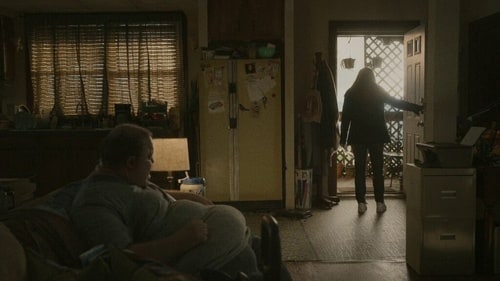
The Whale was another thrifty endeavour for Aronofsky, who created the film on a scant $3 million budget. Aronofsky rejects glamour and aesthetically pleasing visuals, as Charlie's dingy, dim, unkempt apartment looks like the genuine, lived-in home of a tragic recluse, down to a dirty old laptop. A thick sense of atmosphere pervades the picture, especially with perpetual, intense rainfall. Although this is the type of movie that should be shot on grainy 16mm film, Matthew Libatique's digital cinematography enhances the distinct visual identity, ensuring it does not look like generic streaming content with bright lights and saturated colours.
Aronofsky struggled to find the right actor to play Charlie, which is the key reason it took a decade for the film to come to fruition. Brendan Fraser is pitch-perfect, earning him a well-deserved Oscar and denoting a well-deserved comeback for the actor after over a decade of obscurity. Despite Charlie's flaws and mistakes, The Whale works because it's easy to care about him and become invested in his fate, thanks to Fraser's nuanced portrayal. Crucially, Charlie does not simply feel like an actor in a fat suit because the movie captures the realities associated with obesity: the awkward walking, intense sweating, laboured breathing, wheezing, thinning hair, and inevitable health complications. Fraser's performance drew controversy from certain groups who felt that Aronofsky should have cast an obese actor instead of using prosthetics and a fat suit. However, prosthetics have long been part of the craft, and the authenticity Fraser achieves is undeniable.
A superb supporting cast surrounds Fraser, including Stranger Things star Sadie Sink, who perfectly embodies the angst, frustration, anger and conflicted emotions of a teenager whose father abandoned them. Beneath the cruelty of every barbed remark lies unmistakable hurt. Sink and Fraser's scenes crackle with volatility not because of raised voices but because every exchange feels like a battle between resentment and the faint, terrifying possibility of forgiveness. A flawless Samantha Morton also appears relatively briefly as Charlie's ex-wife, and her powerhouse performance adds another layer of power and emotion to the story. Through her limited screen time, Morton crystallises years of pain and betrayal, reminding us that Charlie's self-destruction deeply scarred those around him. Meanwhile, Hong Chau is extraordinary as Liz. The actress grounds the film in fierce, exhausted compassion, oscillating between tenderness and barely concealed fury. Rounding out the main players is Ty Simpkins, who brings an unsettling earnestness to Thomas, whose naïve religiosity gradually gives way to confusion and doubt. Together, the supporting cast ensures the film's tragedy radiates outward; this is not just a story about one man's collapse, but the emotional wreckage surrounding it.
Aronofsky offers no comfort with The Whale; instead, he offers confrontation - with mortality, regret, and the consequences of our choices. And yet, within that confrontation lies a fragile thread of grace. The film is as difficult as it is compassionate, anchored by a transformative central performance that feels less like acting than exposure. It is a cinematic work that wounds deeply but deliberately, and the ache it leaves behind is precisely the point. In an uncommonly strong year for awards contenders - including The Banshees of Inisherin, The Fabelmans, Top Gun: Maverick, Tár, and Marcel the Shell with Shoes On - The Whale stands out as the best feature film of 2022.
10/10

