

 Login
Login
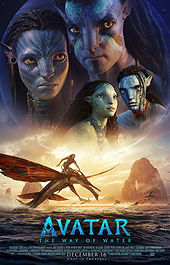
After thirteen years, filmmaker James Cameron returns to Pandora with 2022's Avatar: The Way of Water, a boldly envisioned blockbuster that overcomes its famously long, complex production history - years of technological development, ambitious underwater performance-capture, and multiple delays - to deliver an experience that feels grand and assured. Cameron leans into the expanded world and family-centred narrative with confidence, crafting a story that remains emotionally rich while pushing the mind-blowing visual filmmaking to new heights. In doing so, he proves his usual sceptics wrong once again, offering a sequel that earns its scale, deepens its characters, and justifies the wait with remarkable excitement and heart.
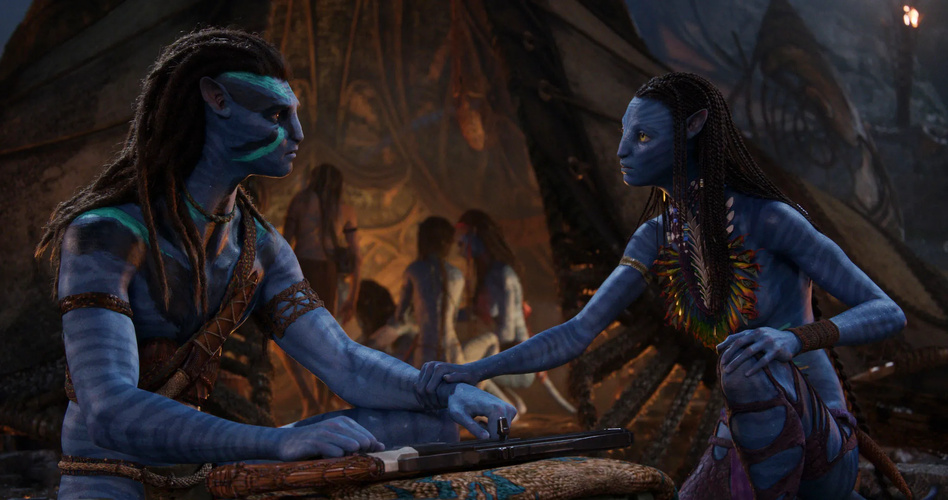
Sixteen years have passed since Jake Sully (Sam Worthington) led the Na'vi to victory against the Resources Development Administration (RDA), repelling the human invasion of Pandora. In the ensuing years, Jake and his wife, Neytiri (Zoe Saldana), welcome sons Neteyam (Jamie Flatters) and Lo'ak (Britain Dalton), daughter Tuk (Trinity Bliss), and Kiri (Sigourney Weaver), mysteriously born from Dr. Grace Augustine's inert avatar. Jake's children also grow close with Spider (Jack Champion), the human son of the late Miles Quaritch (Stephen Lang), who remained on Pandora after the RDA withdrew. But the "sky people" soon return, prepared to colonise the moon in earnest. Leading the soldiers on the ground is Colonel Quaritch, resurrected as a Na'vi avatar with his old memories and personality, now singularly focused on eliminating Jake. Recognising the danger, Jake uproots his family and seeks refuge with the oceanic Metkayina clan, led by Chief Tonowari (Cliff Curtis), who accepts the Sullys despite the misgivings of his wife, Ronal (Kate Winslet). The family begins to learn the ways of the sea, but Quaritch refuses to abandon the hunt, pushing the conflict into Metkayina waters.
Cameron, long criticised for Avatar's simplistic screenplay, enlisted a team of writers to shape the four planned sequels. He co-wrote The Way of Water with Rick Jaffa and Amanda Silver (Rise of the Planet of the Apes), from a story devised alongside Josh Friedman (Kingdom of the Planet of the Apes) and Shane Salerno (Savages). The first Avatar plays as a sweeping romantic adventure with echoes of Dances With Wolves and even Titanic, but The Way of Water adopts the structure of a war film, establishing the conflict between the Na'avi and the humans as Jake leads a guerrilla warfare campaign against the insurgents. Once the story shifts to Pandora's eastern sea, the pace grows more leisurely as the Sullys adapt to Metkayina life while Quaritch closes in. Despite its substantial 190-minute running time, the film's momentum rarely falters, sustained by the constant threat of pursuit and the richness of the new environment.
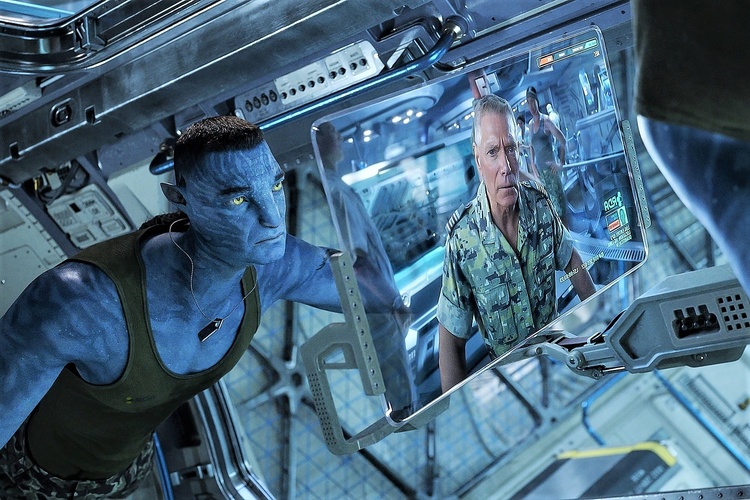
Quaritch eventually finds the Sullys and unleashes the full weight of the RDA's military power, culminating in a spectacular and sustained climactic set piece. Cameron's command of action remains unparalleled, from the early skirmishes to the expansive water-bound showdown. The finale is not without flaws - most notably the abrupt disappearance of the Metkayina from the final stages of the battle, and the loss of valuable extended combat material featured in the Collector's Edition - but it remains a breathtaking demonstration of Cameron's staging and rhythm.
Avatar: The Way of Water threads its spectacle through themes to give the story weight and resonance. The script examines the weight of responsibility across generations, asking how families protect one another while still allowing room for growth, individuality, and consequence. Pandora's oceans also become a living metaphor for interdependence, where every creature's survival relies on balance, reciprocity, and respect. Additionally, Cameron unsurprisingly returns to his long-standing concerns about colonial exploitation and ecological fragility, using the Sully family's relocation and the Metkayina's traditions to explore how communities adapt or fracture when confronted with relentless outside pressure. Meanwhile, Quaritch's rebirth as a Na'vi introduces questions of identity and moral agency. As he wrestles with inherited memories and a body tied to a culture he once despised, the film suggests how environment and embodiment can destabilise even the strongest convictions, adding an unexpectedly reflective dimension to the central conflict.

Avatar set a new benchmark for computer animation, but the standards for digital effects plummeted in subsequent years, with major studios cutting corners while demanding unrealistic work output from overworked artists. With VFX quality now a secondary concern, Avatar: The Way of Water arrives at the right time to show that digital effects can still look astonishingly convincing and practically photorealistic when visual effects artists have sufficient time. Cameron and Wētā FX raise the bar once again here, making it genuinely impossible to tell when the live-action photography ends and the digital effects begin. The integration of Spider with the mo-cap characters and digital environments is especially convincing. A standout moment in the third act all but invites a whispered, "How did they do that?" - when Spider climbs out of the water beside fully digital Na'vi characters, and together they haul a Na'vi body in a shot that blends live-action and CG with remarkable seamlessness. In 2025, such mind-blowing shots are remarkably rare.
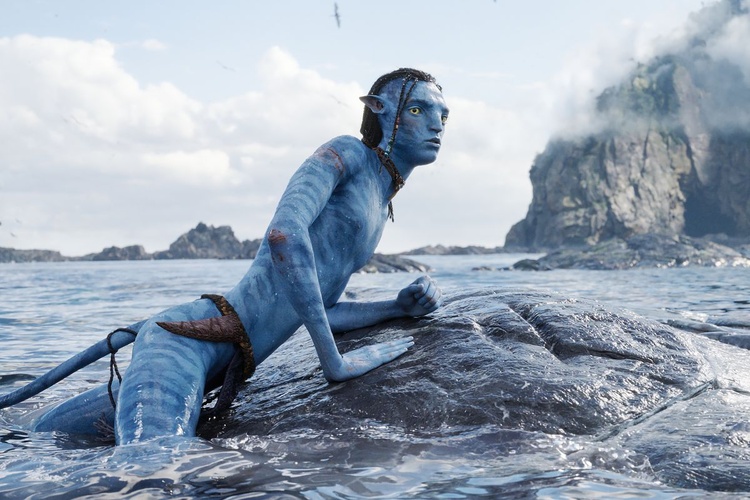
Where Avatar explored Pandora's rainforests and the Omatikaya clan, the sequel dives into the moon's oceans to develop the distinctive culture and physiology of the Metkayina. Although the first movie featured only brief aquatic sequences, Cameron long considered underwater motion-capture too difficult to render convincingly. New technology finally made it possible: the crew constructed enormous water tanks, developed dual-surface capture rigs, and trained the cast in free-diving to perform extended scenes without scuba gear. The resulting water effects are extraordinary - fluid, luminous, and palpably immersive - making Pandora's oceans not merely believable but transporting. The new setting also allows Cameron to expand the moon's ecosystem, introducing a range of aquatic creatures rendered with remarkable detail.
This sequel also marks Cameron's first film since the death of longtime collaborator James Horner. Composer Simon Franglen steps in, weaving Horner's familiar motifs with new material. The score may not reach the emotional heights of Horner's original work, but it supports the imagery with sensitivity and power.
Cameron brings back most of Avatar's leading players, including some who previously died. Lang is a particular standout as the Na'vi Quaritch clone, emanating authority and emerging as a believably ruthless threat, while Weaver delivers a surprisingly nuanced performance as the adolescent Kiri. Worthington and Saldana are both superb, with Saldana again bringing immense emotional intensity despite only performing via mo-cap, while the newcomers are equally strong. Winslet, working with Cameron for the first time since the water-based Titanic, disappears into the role of Ronal, ensuring that her presence does not amount to stunt casting. Also joining the cast in a live-action capacity are Brendan Cowell as a swaggering hunter and Jemaine Clement as a marine biologist. Cowell brings a welcome touch of colour to his role, relishing the chance to play a cartoonish villain.
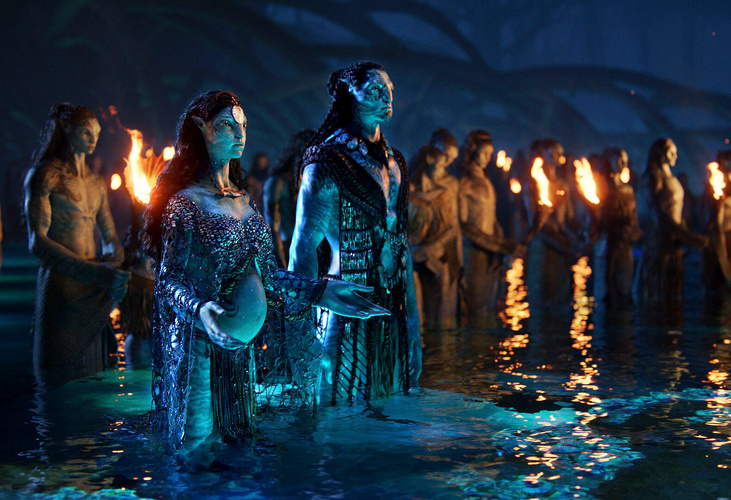
With studios routinely pouring enormous budgets into forgettable blockbusters that rely too heavily on shonky digital effects, Avatar: The Way of Water stands apart as a production whose staggering cost is genuinely visible on screen. Not everything works: the conflict between Jake's children and the Metkayina youths feels trite and predictable, and a few narrative beats verge on familiar. However, the film delivers where it matters: awe-inspiring spectacle, emotional resonance, and a rich expansion of Pandora's world. Avatar: The Way of Water is a rare modern blockbuster that withstands critical scrutiny, rewards patience, and offers a deeply satisfying action-adventure for mainstream audiences and critics alike.
8.7/10
8.7/10

