

 Login
Login
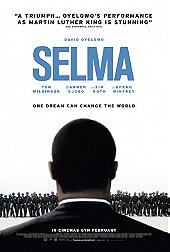
Before winding up in the hands of Ava DuVernay, Selma had passed through the hands of numerous directors including Lee Daniels and Stephen Frears. Thank god it took so long to finally get made, as DuVernay has steered away from bland “Great Man” territory (think of The Theory of Everything, The Imitation Game, or American Sniper) into thornier, more panoramic territory. Part of the reason for this was a lack of access to Dr. King’s famous speeches, demanding that the filmmakers instead find ways to show his taciturn mind and ability to galvanize.
Selma is the kind of film that we should be showering and celebrating with Oscar nominations. Somehow, it would up with only two nominations, and one win in a minor category. The best of these types of film faithful recreate a past struggle but frame it in a way that feels fresh to a modern audience. Far too much of Selma feels like it could be contemporary news footage if you merely updated the clothing and hairstyles. This film is having a conversation with the past, yet still manages to find hope for the future.
Perhaps it’s that spark of hope which animates Selma so brightly. It certainly colors in the central performance from David Oyelowo. Oyelowo finds a way to bring King down from the vaulted space of history and make him a living person. Too often films about “Great Men” feature central performances that feel less like a real person than a series of famous moments and tics cobbled together (yes, I’m looking at you Benedict Cumberbatch), but not here. And if Selma ever stumbles, and it sometimes occasionally wobbles, it’s in the villainous performance by Tim Roth as George Wallace. Roth is not bad, but sometimes gets a little too broad and plays a character instead of making it feel real.
This never detracts enough to keep Selma from being anything other than essential viewing. From the top down it’s a stacked cast doing commendable work, making each moment feel as real and accurate as possible, so one occasionally too broadly played scene is easily forgiven. And if there was any justice in the world both David Oyelowo and Carmen Ejogo would have been blessed with Oscar nominations. A scene that seemed like a lock to at least get them some recognition is one in which Coretta confronts her husband about his infidelity. It’s played with minimal emotional outburst, building in slow burning intensity, and hits all the harder for it.
This is a retelling of an important historical moment that finds the meeting ground between intimacy, epic scope, large ambitions, brutality, and hope. Selma may have a few moments of budgetary restraints and obvious compromises between director and studio, but Selma is still a profoundly moving experience. Although it does make one wonder why a man like King has been given such a small budget, while Chris Kyle’s questionable sniper gets a huge budget, A-list director, and a big studio push. The answer is probably obvious, and too depressing to really think about.
