

 Login
Login
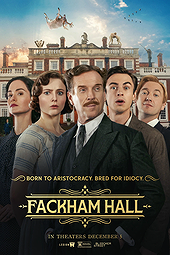
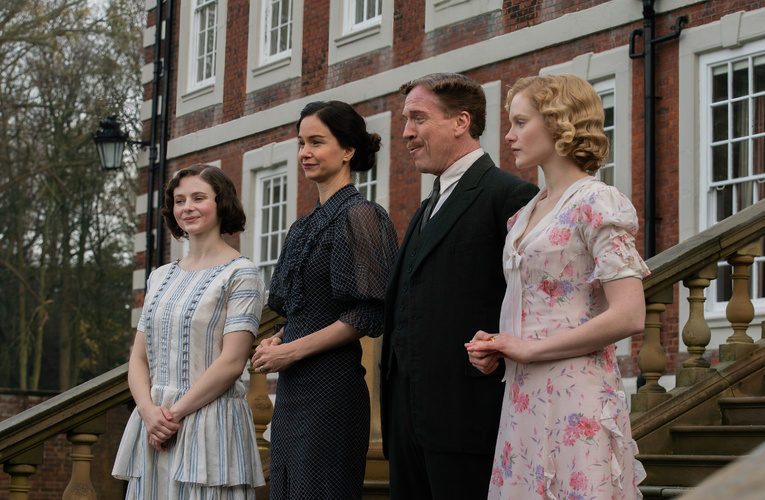
The Davenport family have inhabited the luxurious Fackham Hall estate for generations, but because Lord Humphrey Davenport (Damian Lewis) has no male heir, they may be forced to leave when he dies. Lord Davenport and his wife, Lady Prudence Davenport (Katherine Waterston), push their youngest daughter, Poppy (Emma Laird), to marry her cousin, Archibald (Tom Felton). When Poppy is unable to go through with the wedding, the family's last hope is Rose (Thomasin McKenzie), Humphrey and Prudence's eldest daughter. When a thief and orphan named Eric Noone (Ben Radcliffe) arrives at Fackham Hall to deliver a letter, he ends up getting a job as a hall boy. Eric sees this as an opportunity to steal money from the Davenports, but he immediately forms a bond with Rose.
The script inherently understands British period dramas, puncturing their solemn self-importance and recognisable tropes with impeccable comic timing and uproarious slapstick. The family's patriarch upholds longstanding traditions, including gifting his daughter an empty necklace box on her wedding day. Estate staff continually stand up whenever Rose enters the room, even though she keeps walking in and out. Lord Davenport's valet serves as an extension of his boss, acting as his arms while the patriarch smokes or picks his nose. When Mrs McAllister (Anna Maxwell Martin) conducts Eric's job induction, she explains every detail, including the definition of "floor" and "wall." Scandals and secrets grow more ridiculous by the minute, a hunting scene leads to abject chaos when a rifle misfires, there are two supporting female characters known as the "Bechdal Sisters," and a wedding dress train is impossibly long.
Visual gags abound, which vary in subtlety. In one moment, Rose shows Eric the book that she's reading, entitled One Shade of Grey. In another scene, an anachronistic Trainspotting poster silently adorns the walls of the servants' quarters, which is all the more funny because its presence is neither explained nor acknowledged. O'Hanlon even explores World War I flashbacks, selling their authenticity with thick film grain and specific colour grading before the tongue-in-cheek comedic payoff. The creative ideas never seem to subside.
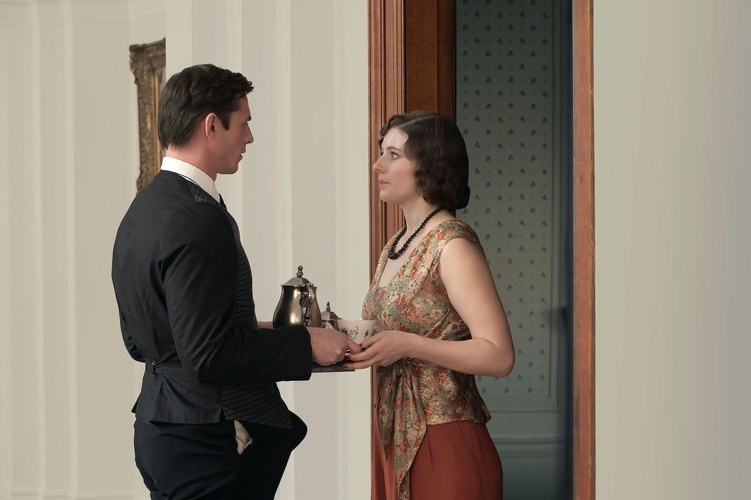
Cheap parody films like Disaster Movie and Meet the Spartans unsuccessfully try to use the small budget to heighten the comedy, hoping that cartoonish CGI and chintzy sets will provide additional laughs. But O'Hanlon approaches Fackham Hall like a genuine period drama: the locations glow with aristocratic grandeur, the sets brim with ornate detail, the costumes swish and sparkle with convincing old-world flair, and the original score by David Arnold and Oli Julian is dramatic and elegant instead of whimsical or humorous. The sincerity anchors the absurdity, as almost any scene could be mistaken for something out of Downton Abbey until the humour kicks in, which makes the gags hit harder. Instead of revelling in silliness or broad performances, O'Hanlon is careful with comedic timing, often building to the laughs and using them as payoffs. For example, Eric shares an intimate moment with Rose while bringing her tea, but Mrs. McAllister interrupts when she notices the boy's enormous erection. With short-form skits filling social media, this measured approach to comedy is very welcome.
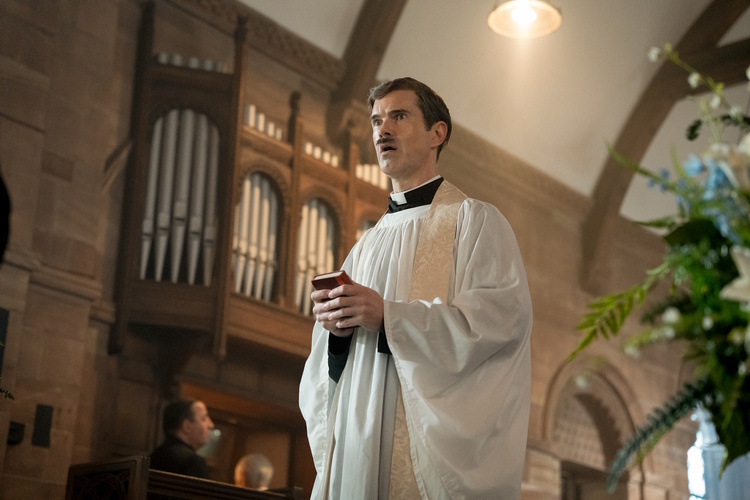
Dramatic actors fill the lead roles and play things straight, which makes the escalating absurdity even funnier. Thomasin McKenzie, who rose to prominence for her nuanced performances in Leave No Trace and Jojo Rabbit, clearly has a ball here and nails the persona of a posh, upper-class British lady. The other performers are equally strong, including Ben Radcliffe (Masters of the Air) as Eric, and Tom Felton as the chauvinistic Archibald. Jimmy Carr even pops in and almost steals the show despite only appearing in two scenes as a vicar who continually misreads his sermons. Sure, it's a one-joke character, but Carr is nevertheless hilarious, and he never wears out his welcome. Another recurring joke is the presence of author J.R.R. Tolkien (Jason Done), who spends the movie scribbling ideas in his notebook for what will become The Hobbit. His presence is an amusing historical in-joke and affectionate ribbing of a recognisable storytelling device.
Fackham Hall might not work for everyone, as it is not aimed at younger viewers who prefer scrolling on their phones during movies. But for those who can appreciate dry, witty comedy, it's an absolute hoot. Pairing meticulous craft with gleeful irreverence, Fackham Hall is a rare type of parody film that understands humour and drama. Even the end credits maintain the comedic tone, supplying side-splitting updates on each character's fate to parody one last genre convention and squeeze out a few final laughs.
8.2/10
