

 Login
Login
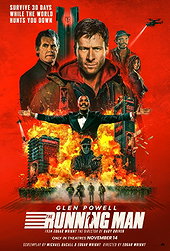
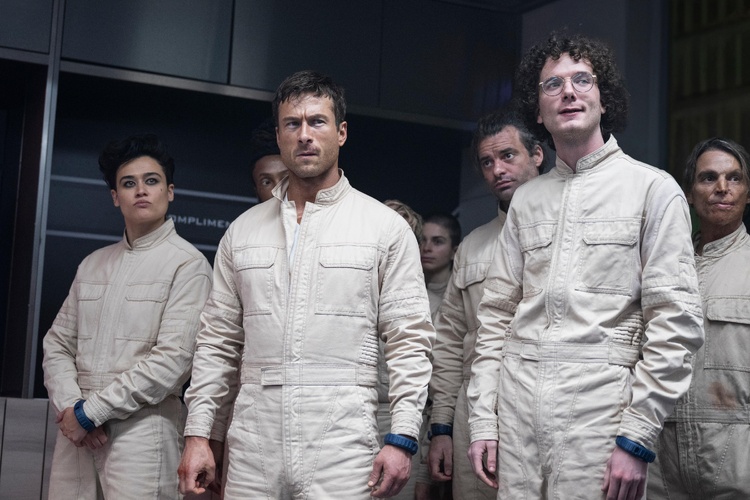
In 2025, an authoritarian media network known simply as the Network controls the United States. With most citizens living in poverty, the Network receives a steady influx of desperate volunteers to appear on dangerous game shows and reality TV. The most popular program is The Running Man, in which runners can win $1 billion if they survive 30 days on the run, while hunters and ordinary citizens set out to find and kill them. Ben Richards (Glen Powell) needs money to buy medication for his sick daughter, and does not want his wife (Jayme Lawson) putting herself in danger to support the family. With no other options, Ben tries out for the Network, and executive producer Dan Killian (Josh Brolin) selects him for The Running Man. Although Ben does not want to appear on the show, Killian convinces him by promising to protect his family. With show host Bobby T (Colman Domingo) overseeing the carnage, Ben flees into the country as the hunt begins.
1987's The Running Man bears little resemblance to King's novel, only using the game-show premise as a springboard for a violent, gleefully goofy action film that showcases Arnie in his prime. Meanwhile, for this new version, Wright and co-writer Michael Bacall (Scott Pilgrim vs. the World) adhere closely to the book's narrative beats, but the result feels overly episodic and bloated, juggling too many characters who receive insufficient development and depth. Most egregious is the inclusion of two Anti-Network activists who serve identical narrative functions, while Amelia is awkwardly shoehorned into the story's final stretch, and her abrupt shift from hostility to Ben's ally is entirely unconvincing. The material might have been better served as a television miniseries, where its sprawling structure could allow for proper character development. As it stands, this iteration of The Running Man underscores the importance of making changes while adapting books for the big screen.

It's disheartening how generic and ordinary this version of The Running Man feels, as there is scarcely any inventiveness or shrewd humour that we expect from Edgar Wright. The television game shows and ads contain some effective satire, and Wright scatters a few funny moments throughout the flick, but it mostly feels like a generic action blockbuster. Even the dystopian setting and themes feel well-worn after so many years of comparable science-fiction movies, from The Hunger Games and Divergent to Mad Max: Fury Road and Ready Player One, and much more. Unfortunately, Wright's take on dystopian sci-fi does not feel compelling or fresh. There is a nugget of an interesting idea in the biased media creating propaganda and controlling the narrative, but it feels like Wright is hesitant to condemn contemporary media outlets properly.
At the very least, The Running Man is an R-rated action movie, a rare beast in contemporary cinema. The picture comes to life in fits and starts, particularly during the brutal action set pieces that look slick and expensive. One standout sequence involves Elton (Michael Cera), an Anti-Network activist whose booby-trapped home kills plenty of armed assailants in creative and brutal ways. However, the hunters feel like a missed opportunity. The 1987 feature contained a selection of colourful, distinctive hunters with their own quirks and badass names. Here, the hunters are generic soldiers in generic uniforms.

Although Glen Powell is usually a perfectly serviceable leading man, he is out of his depth here, struggling to create a compelling or consistent character. His Ben Richards never quite gels as either an everyman pushed to desperation or a defiant anti-authoritarian figure. By contrast, several supporting players inject more energy into the film. Michael Cera and Martin Herlihy (a dead ringer for Lewis Pullman) bring some much-needed pep and eccentricity, while Colman Domingo clearly relishes the chance to play the smarmy host, injecting the film with a theatrical flair it sorely needs. Josh Brolin is reliably solid as Dan Killian, but the character never achieves the menace or complexity required to anchor the story's moral conflict. Elsewhere, strong actors like William H. Macy, Emilia Jones and Lee Pace are left stranded by thin characterisation, reinforcing the sense that the ensemble is simply too large for the film to handle effectively.
The Running Man is not as dire as the remakes of Total Recall or RoboCop, but it feels like a wasted opportunity. Wright battles with immense overlength as he struggles to maintain interest and energy, particularly during the beefy second act, when the pacing slows to a crawl. The decision to soften King's bleak ending in favour of something safer and more formulaic only exacerbates the problem, forcing the movie to limp through an extended finale that overstays its welcome. While the film is competently made and occasionally entertaining, it lacks the bite, invention, and confidence necessary to justify its existence. In the end, this new The Running Man proves that fidelity alone is not enough and that even a great director can stumble when they fail to properly reshape material to make a compelling film.
5.6/10

