

 Login
Login
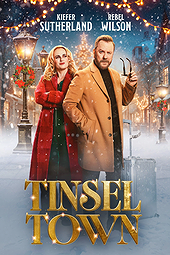
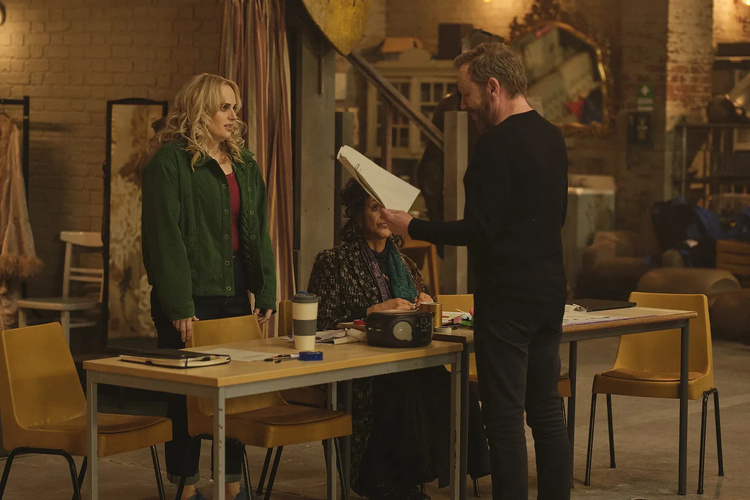
After finishing his work on the blockbuster Killing Time VII, Hollywood superstar Bradley Mac (Kiefer Sutherland) finds himself out of work when the studio cancels plans for future sequels. Bradley's options for acting work are limited, as the performer has been blacklisted and typecast after years of poor on-set behaviour. Bradley's agent (Katherine Ryan) suggests theatre work in London, but upon arriving in the United Kingdom, the superstar soon finds he has been tricked: he'll be playing Buttons in a pantomime production of Cinderella in the small town of Stoneford. Unable to wiggle out of the contract, Bradley starts rehearsing, while his bitter ex-wife, Grace (Alice Eva), forces him to spend time with his daughter, Emma (Matilda Firth). Bradley also bonds with choreographer Jill (Rebel Wilson), who is dealing with a troublesome ex-husband, Kieran (Danny Dyer).
The way that Tinsel Town skewers major Hollywood stars is amusing, from the tongue-in-cheek film-within-a-film snippet in the opening sequence to Bradley's reputation as a difficult, demanding diva who refuses to do his own stunts. Casting the gruff Sutherland in the lead role is inspired, as the actor rarely does comedy, but he approaches the material with delicious zeal and enthusiasm, openly mocking his own tough-guy image and leaning into the material's absurdity. Another standout is the always-brilliant Derek Jacobi, a theatre box office attendant who used to perform in pantomimes before a personal tragedy forced him offstage permanently. A key scene involving Jacobi and Sutherland is one of the most poignant moments in the whole feature, displaying more care and sincerity than the usual Hallmark dreck.
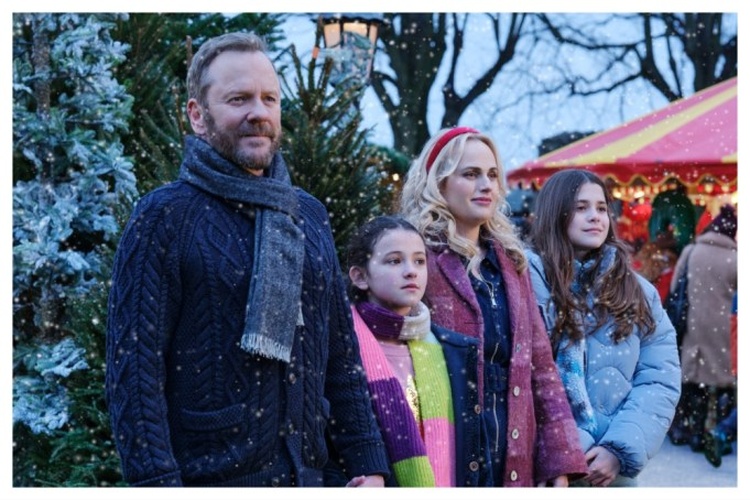
The narrative trajectory is unsurprising, as the screenplay deploys many recognisable tropes: an absent father bonding with his child, an abusive ex-husband who provides some trademark conflict, a third-act complication that threatens the performance, and so on. Unfortunately, Tinsel Town begins to lose its way in the third act when it piles on the complications, leading to a court case that slows down the pacing. Luckily, it soon picks up, and the climactic performance is wonderful. There are ample laughs throughout the picture, particularly from Jason Manford and Asim Chaudhry as David and Danny, two flamboyant actors who play the stepsisters in the panto performance of Cinderella. Mamford and Chaudhry routinely steal scenes with their sharp wit and strong personalities. Less successful is Rebel Wilson, who is impressively low-key here, but she is unable to mask her native Australian accent.
It's refreshing to see a Christmas movie that doesn't have the chintzy, low-grade look of a Hallmark movie. Tinsel Town has a more nuanced visual style and looks more cinematic, while the English scenery is far more intriguing than studio backlots, artificial-feeling sets, or rural American locations. Foggin shot the movie on location in the English town of Knaresborough in North Yorkshire, and this gives the production a welcome sense of authenticity. Foggin also fills the picture with festive music, from the Christmas-tinged soundtrack by Kara Talve and Sami Goldberg to the several recognisable Christmas songs that appear.

Do not let the trashy, AI-looking poster fool you - Tinsel Town is worth your time and attention because its heart is in the right place. Beneath the celebrity satire and broad jokes is a genuine affection for performance, community, and the strange magic of live theatre at Christmas. The feature's understanding of pantomime as both gloriously silly and quietly meaningful gives it an emotional backbone, elevating it above many formulaic festive fares. When Tinsel Town leans into this sincerity rather than overcomplicating its plot, it mostly succeeds, delivering enough laughs, charm, and seasonal goodwill to justify its existence.
6.7/10
