

 Login
Login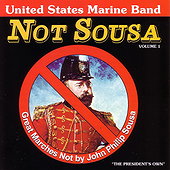
I don't use artificial intelligence for writing. I think I'm the only Listal user who almost always listens to old German and Austrian military music. I always wonder which music did Maude Adams (the famous American actress) like? I have always been a very curious person.
Real music is created only by using non-electronic musical instruments. We should not destroy modern/contemporary "art". Instead, we should mock it and use it to learn how not to create art.
I listened to this album on YouTube here: www.youtube.com/playlist?list=PLBUm3y68NP2lAmbvrcnvUszDIQ1Zceb91
Let's review all the marches on this album!
The National Emblem march was composed by Edwin Eugene Bagley of the USA in 1902. Bagley didn't like it and threw the notes in a trash can, but then his band removed the notes from the can and played this march. National Emblem became one of the most famous American marches. A fantastic march, indeed!
The Alte Kameraden (Old Comrades) march was composed by Carl Teike of Germany in 1889. His kapellmeister told him to burn the notes, but Teike refused and then left his marching band. It is one of my most favorite marches! I consider it a good example of what real music should sound like. The band's performance is great! However, I got used to this version, so I prefer it: www.youtube.com/watch?v=IXH3QJrx98U
The Einzug der Gladiatoren (Entrance of the Gladiators) march was composed by Julius Fučík (an ethnic Czech) of Austria-Hungary in 1897. Initially it was named Grande Marche Chromatique (Grand Chromatic Scale March). Then Fučík became impressed with gladiators and changed the march's name. However, in 1901, Carl Fischer (an American publisher) published a version of this march with faster tempo. This version is commonly known as a music piece for circuses. Sadly, I can't find the original version with standard tempo anywhere, and I can't read notes. I would rather order a custom music piece for use in circuses than use this march.
The Radetzky march was composed by Johann Strauss Sr. of Austria in 1848 to honor field marshal Joseph Radetzky von Radetz. I like it a lot! Very classy and beautiful!
The Invercargill march was composed by Alexander Frame Lithgow of New Zealand in 1901 to honor the city of Invercargill in New Zealand. A very pleasant march!
The Valdres march was composed by Johannes Hanssen of Norway in 1904 to honor the Valdres district of Norway. I don't like this march. It's not as awful as modern "music", but I just don't find it pleasant and interesting enough. Not the band's fault.
The Purple Pageant march was composed by Karl L. King of the USA in 1933. It's very sad that I can't find the story about this march. But this march is a nice blend of traditional music and of good things of the 1930s!
The Rolling Thunder march was composed by Henry Fillmore of the USA in 1916. It was created as a circus march, but I can't find the story about it. And it's simply too fast for me. Not the band's fault. They actually did a great job playing this complex march!
The L'Inglesina (The Little English Girl) march was composed by Davide Delle Cese of Italy in 1897. It saddens me very much that I don't know Italian and that I can't find the story about this very, very beautiful march. Certain parts of this march make me want to cry from emotions. Is it because my Moon sign is Cancer (my Sun sign is Libra)? Why listen to anything electronic when we have this masterpiece?
The Crown Imperial march was composed by William Walton of the UK in 1937 for the coronation of British King George VI. It is too modern for me, and I think it sounds slightly more like a music piece from a movie than a march. Not the band's fault. They performed great!
The H. M. (His Majesty's) Jollies march was composed by Kenneth J. Alford of the UK in 1929 to honor the Royal Marines of the UK. Jollies is a nickname for the Royal Marines. A great and positive march! This is what should be very popular in the UK and in other countries!
The Chimes of Liberty march was composed by Edwin Franko Goldman of the USA in 1922, and it was revised in 1937. I don't know the story about it. Since I like German and Austrian marches very much, I think they should have included a different march (like the Marsch des Hessischen Kreisregiments und des Regiments Landgraf by an unknown composer from the late 18th century below), but Chimes of Liberty is definitely much better than disgusting electronic cacophony that is being heavily promoted by mainstream media. There are millions of talentless "musicians", but the second Mozart doesn't exist.
www.youtube.com/watch?v=6md0l0LkUhQ
The Marche des Parachutistes Belges (March of Belgian Paratroopers) was composed by Pieter Leemans of Belgium during both World Wars. In the First World War, his commander requested him to write a march, but Leemans didn't finish it. During the Second World War, Leemans and a group of paratroopers composed this march in one night. Just listen! It sounds like a magical music piece from a fairy tale! Why do people still listen to electronic "music"? Classical music and marching music can easily replace any electronic "music piece".
The Le Père la Victoire (The Father of Victory) march was composed by Louis-Gaston Ganne of France, but I don't know when. My French is still very horrible and I can't find the story about this march. But it's a beautiful and inspirational march nonetheless!
The Boys Of The Old Brigade march was composed by William Paris Chambers of the USA in 1901. Not to be confused with an Irish song and a British march. Unfortunately, I can't find the story about this American march. A complex, but great and very positive march!
The March Of The Steelmen was composed by Charles S. Belsterling (a vice-president of The United States Steel Corporation) and Harry L. Alford of the USA in around 1936. It was created for the Northwestern University Wildcat Marching Band. A surprising choice. It is a nice and cheerful march, but Belsterling should have focused on environmental protection. Absolutely all humans are environmentalists because absolutely nobody wants to live in a polluted area.
However, I don't like the name and the cover of this album at all because they disrespect John Philip Sousa — the famous American composer. They should have simply asked the commandant of the Marine Corps or a very distinguished marine about his/her favorite marches, then recorded them and named this album "Favorite marches of our commandant (or of our very distinguished marine)". But they did this instead. Most modern humans truly have zero imagination.
The band's performance is great! The choice of marches is okay. People who like very old music may like these marches. But the name and the cover of this album are terrible. Names and covers are very important to me, so I can't rate this album above 1 out of 10.
1/10
78 Views
1
 vote
vote

