

 Login
Login
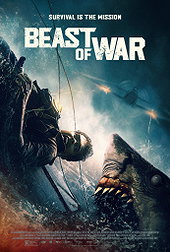
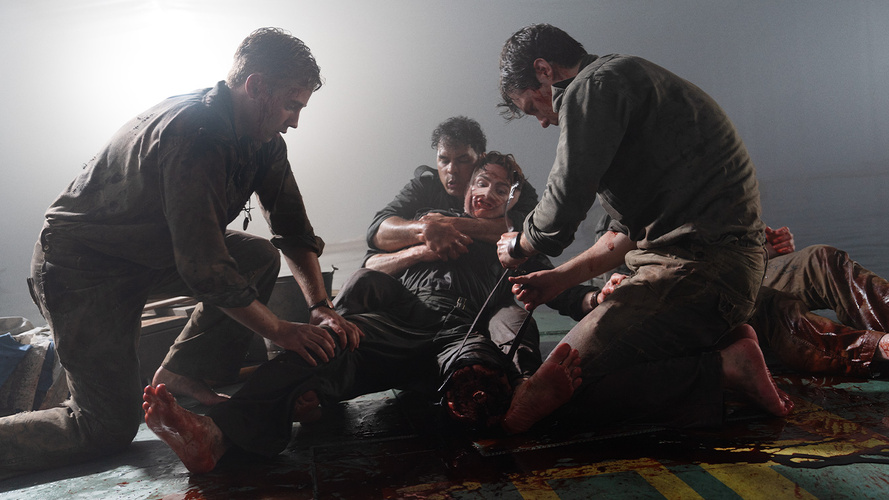
In 1942, hundreds of Australian soldiers board a ship bound for Europe to join the Allied war effort after completing their basic training. Among them is an Aboriginal man, Leo (Mark Coles Smith), who makes friends with young Will (Joel Nankervis) during boot camp. But the warship sinks in the Timor Sea, resulting in countless casualties and leaving a small group of survivors on a makeshift raft, including Leo, Will, Des (Sam Delich), and Thompson (Sam Parsonson). With Japanese planes still in the area, the men cling to the hope of rescue as they drift with the tide and collect supplies from the floating debris field, but a more immediate threat emerges in the form of an enormous great white shark.
The Australian-born Roache-Turner is no stranger to monster movies after tackling zombies in his Wyrmwood flicks, and a giant spider in last year's Sting. The filmmaker sought to make a war movie with Beast of War, but since the horror genre is more marketable, adding a man-eating great white shark to the mix made it easier to raise the required financing. The oversaturated shark genre is full of hit-and-miss flicks about tourists who become stranded in the middle of the ocean (Great White, The Requin, Open Water 3, Shark Bait, Something in the Water... heck, a new one probably dropped on Netflix while writing this review), making Beast of War a welcome and enjoyable change of pace with its evocative WWII setting and distinctive visual style. The script also adds a unique angle by centring on an Aboriginal lead and respectfully representing Indigenous culture. Roache-Turner even has fun with the age-old trope of somebody eating all the food.
Before the carnage begins, Beast of War opens in the dense jungles of Australia (the Byron Bay hinterland, to be more specific), observing the military recruits as they train and bond. This opening segment offers welcome, efficient character work and varied scenery, resulting in more colourful, dynamic cinematography before the characters become stranded on a small raft in the middle of the ocean. After all, it is essential to care about the characters in a horror movie, but Roache-Turner's screenplay and casting are imperfect. Indeed, several of the characters are interchangeable, names do not always stick, and there's an element of villainy among the Aussie men that feels contrived and unnecessary.
To mask the small budget and disguise the lack of scope while shooting inside a studio tank in Brisbane, the movie relies on thick fog and shallow depth-of-field cinematography. The illusion is hugely effective, and the striking cinematography by Mark Wareham (Boy Swallows Universe, Clickbait) gives the picture honest-to-goodness visual gravitas, ensuring it does not look like another nasty low-budget distraction.
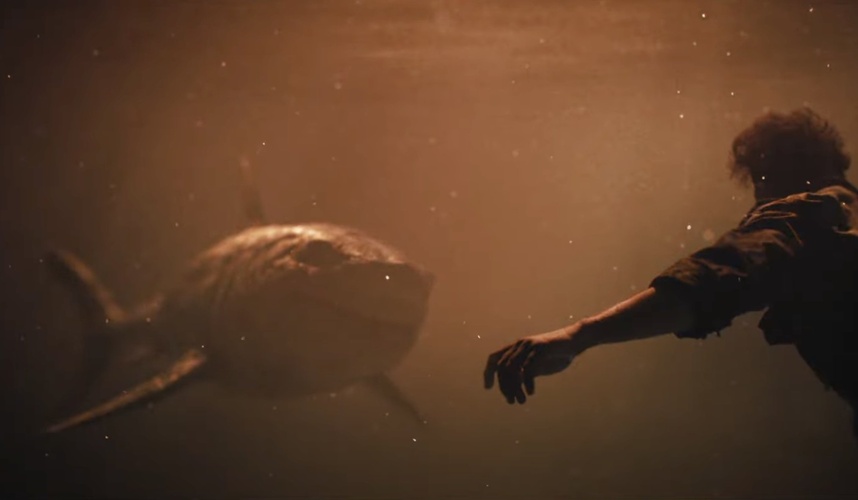
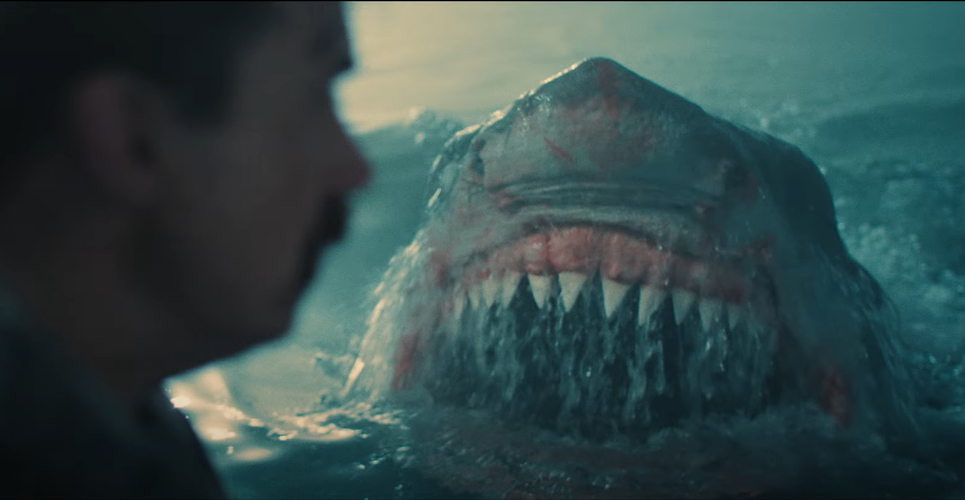
Miraculously, Beast of War also features an animatronic great white shark (affectionately known to the crew as Shazza), created by a Brisbane-based special effects company. The tangibility of the practical fish convincingly surpasses the dodgy CGI of countless other shark movies - because our brains can accept that this thing is real, the attack scenes are more terrifying and immediate. Additionally, instead of a realistic-looking shark, Shazza looks more grotesque and unnerving, with countless scars. Even the occasional digital effects shots (primarily when the shark appears underwater) look convincing, which is rare for an Aussie film. The attack scenes benefit from an R-rated punch that allows for plenty of bloodshed, and one soldier is even blown apart by a grenade. Wisely, Roache-Turner does not dwell on the gore, as he keeps the attacks taut and brutal while still delivering plenty of effective money shots.
Roache-Turner manages to have fun with the premise without Beast of War devolving into a mindless B-movie, incorporating moments like a climactic showdown with a Japanese soldier, and Leo facing down the monstrous shark. There are also splashes of humour to liven up the proceedings, including a desperate moment when the soldiers discuss drinking their own urine. Beast of War does start to wear out its welcome during the third act, as there is only so much material that Roache-Turner can mine from the premise of soldiers on a raft. However, with an economical running time of 87 minutes, the movie does not feel too prolonged or dull. If shark movies and/or horror flicks are your thing, Beast of War is worth your time and attention.
7.0/10
