

 Login
Login
The motion picture that marks Superman's return to the big screen after nearly twenty years, Superman Returns tones down the cheesiness and buffoonery of previous films to restore a sense of humanity and sincerity to the franchise. With director Bryan Singer (X-Men, X2) at the helm, Superman Returns is a homage sequel to Richard Donner's Superman and Richard Lester's Superman II. Indeed, rather than returning to the comics to produce a fresh new cinematic take on the enduring DC Comics character and further explore the mythos, Singer mounts an enormously expensive tribute to 1978's Superman. The resulting movie boasts visual highlights and spectacle, thanks to the benefit of state-of-the-art special effects, but Singer falls short of delivering a truly satisfying Superman blockbuster. Although Superman Returns is better than Superman III and Superman IV: The Quest for Peace, that is a low bar to clear.
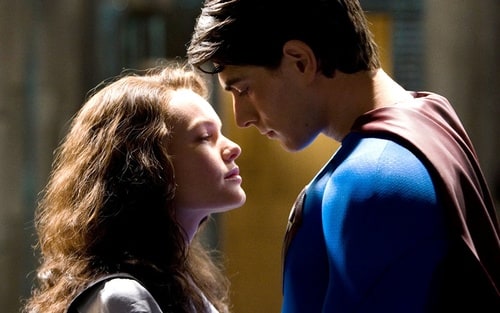
After spending five years searching for the remnants of his home planet of Krypton, Superman (Brandon Routh) returns to Earth and soon resumes his job as a journalist for the Daily Planet using his alter ego, Clark Kent. However, during his time away from Earth, Lois Lane (Kate Bosworth) gave birth to a child named Jason (Tristan Lake Leabu) and got engaged to Richard White (James Marsden), the nephew of Daily Planet editor Perry White (Frank Langella). In addition, Lois's anger about Superman leaving the planet led her to write an acclaimed article positing that the world no longer needs the Man of Steel. As Superman tries to reconcile with Lois, sociopathic scientist Lex Luthor (Kevin Spacey) develops a new plan to create a new continent in the open ocean using shards from Superman's Fortress of Solitude. The scheme will change the world's physical makeup, killing billions of innocent people as a result.
In the nineteen years between Superman IV: The Quest for Peace and Superman Returns, several writers and filmmakers attempted to bring the Man of Steel back to the big screen. After Cannon Films cancelled their planned Superman V, Warner Bros. purchased the film rights and pursued several proposed projects, including the much-publicised Superman Lives, which was going to be directed by Tim Burton in the late 1990s from a script by Kevin Smith, with Nicolas Cage onboard to play the hero. Wolfgang Peterson also tried to mount a Batman vs. Superman film in the early 2000s, but it never materialised. Superman Returns originated as Superman: Flyby, a radically different take on Superman and the character's mythos, written by J.J. Abrams. However, after two directors (Brett Ratner and McG) quit Flyby, Bryan Singer signed on for the project and scrapped the existing script, developing an entirely new story with X2 writers Michael Dougherty and Dan Harris. Even though Superman Returns is essentially a sequel to Superman and Superman II, the movie curiously takes place in a contemporary setting with cell phones and a date-stamped 2006 newspaper. The loose continuity evokes the James Bond franchise.
Singer, who banned comic books from the set of X-Men, chose Donner's Superman film as his point of reference for Superman Returns, even commencing the picture with a title sequence in the same style as Superman, accompanied by John Williams's iconic, uplifting theme music. But Singer's worship of Donner's Superman extends to the story, with Luthor's plan to make a new continent feeling too reminiscent of his scheme in the original film, and it takes too long to develop; consequently, Returns fails to offer anything new, innovative, or thrilling. Additionally, there is too much dead narrative weight here, as Superman Returns clocks in at a gargantuan 154 minutes. The first act, in particular, is full of superfluous moments, including a strange scene in which Lex Luthor secures the fortune of a wealthy widow, as well as scenes of Clark spending a considerable amount of time with Jimmy Olsen. Singer even recognises the editing shortcomings, as Superman flying into action to save a damaged airliner should be the first time we see Clark/Superman. There are many other redundant scenes throughout the film that do not meaningfully contribute to the story or characters, and Superman spying on Lois, Richard, and Jason in their home is undeniably creepy. The notion of Superman having a child with Lois is the most promising subplot here, but it ultimately leads nowhere.
Superman Returns marks the first time filmmakers could utilise contemporary digital effects to bring the Man of Steel to life, and the movie does not disappoint in this respect. Armed with a gargantuan budget of over $200 million, making it one of the most expensive films in history at the time, Singer executes the set pieces with sensational flair and astonishing visual effects that mostly hold up nearly twenty years later. Without the janky blue-screen compositing of the old Superman films, the illusion of Superman flying through the air looks more believable than ever, and the action sequences are significantly larger in scope. Singer hits the ground running with an outstanding, crowd-pleasing set piece that showcases Superman making his memorable return by saving a Boeing 777 from crash-landing, while the Man of Steel thwarting a robbery is also a highly compelling highlight.

The only sequence that does not stand up to scrutiny is a flashback to young Clark leaping through a field in Smallville, as the digitally enhanced jumping looks strange. It's an unnecessary scene, making it all the stranger that Singer chose to include it in the final cut while removing an expensive "Return to Krypton" prologue that cost $10 million. Furthermore, since the villains here are all mortal, Superman Returns lacks a showstopping climactic fight to truly show off the Man of Steel's abilities; instead, the movie peters out with a resounding whimper, making the third act feel remarkably anticlimactic. Thus, despite a few action highlights, the picture lacks excitement.
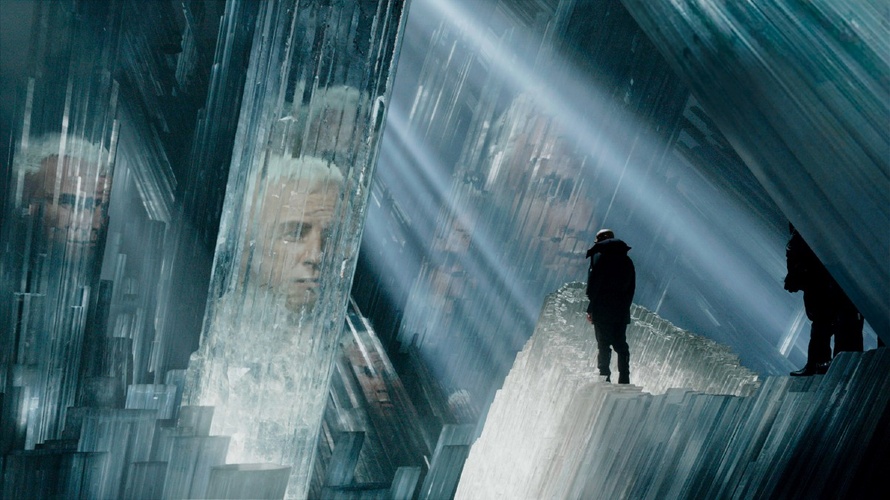
Instead of shooting on 35mm film, like the previous Superman flicks, cinematographer Newton Thomas Sigel (X-Men, X2) captured the action using Panavision's Genesis digital cameras, making Superman Returns one of the earliest digitally shot feature films. Thankfully, the production design carries more vibrancy and life than the previous Superman films, with sets that do not look like obvious, lifeless soundstages. The visual design of Superman Returns is hard to fault, with the city of Metropolis gaining a stronger sense of identity beyond an obvious New York City stand-in, while the Fortress of Solitude looks striking thanks to modern filmmaking techniques. Composer John Ottman also incorporates recognisable motifs from Williams's Superman score into his compositions, and the tribute is genuinely effective, as the soundtrack is a tremendous asset. Additionally, to maintain a welcome sense of continuity with the Christopher Reeve Superman movies, Superman Returns features the return of Marlon Brando as Jor-El through unused footage and a computer-generated recreation of the legendary performer. Brando's voice during the opening sequence adds undeniable gravitas.
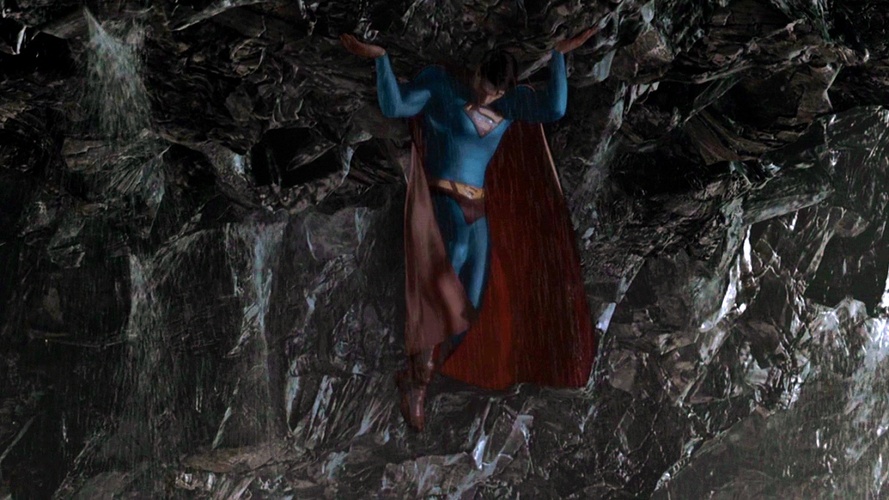
Continuing the tradition of casting unknown actors in the titular role, Brandon Routh is a terrific Clark Kent/Superman, continuing the character's legacy with reverence and confidence. Routh looks the part, bearing a striking resemblance to the late Christopher Reeve, and he nails the all-important double act: he is believable as the clumsy, awkward Clark and the heroic, boyishly charming Superman. Other casting is equally spot-on, including the terrific Frank Langella as Perry White, and Sam Huntington, who's spot-on as the dorky, eager-to-please Jimmy Olsen. Meanwhile, Kevin Spacey presents a different take on Lex Luthor compared to Gene Hackman. Spacey's performance is understated yet menacing, creating a credible portrayal of a madman. However, there is no way to defend Kate Bosworth, who is an atrocious Lois Lane. Bosworth, who was only 22 years old during filming, is not believable as a seasoned, Pulitzer Prize-winning journalist, and conversations about past events are bizarre - was she a teenager when she fell pregnant and Superman departed Earth? Crucially, she lacks the spunk and charm of Margot Kidder, and with Lois playing an unusually large role in the movie's proceedings, the actress's shortcomings become a significant problem. Consequently, Bosworth earned a Razzie nomination for Worst Supporting Actress.
Superman Returns flirts with greatness, but its dreary deconstruction of Superman and overlong narrative prevent the movie from reaching its full potential. A drastic re-edit would ameliorate some of the problems and make for a smoother viewing experience, but it would be difficult to overlook the lack of a satisfying climax. Nevertheless, Superman Returns is worth watching for fans of the character and the franchise, as some of the set pieces still have merit, and there are fun references and callbacks to the previous films, including a spiel about flying still being the safest way to travel. Despite Warner Bros. spending heavily on the worldwide marketing campaign, Superman Returns proved to be a box-office disappointment for the studio, ultimately leading to the cancellation of the planned sequel. Instead, the studio forged ahead with a complete reboot, 2013's Man of Steel, with director Zack Snyder taking the helm.
5.7/10
5.7/10
