

 Login
Login
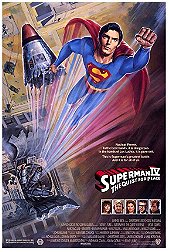
The once-brilliant Superman film series sputters out with a whimper with 1987's Superman IV: The Quest for Peace, a lethargic, bargain-basement superhero action adventure that the movie's cast and crew now regard as a regrettable mistake. Although this fourthquel retains many of the original cast members, including the return of Gene Hackman as Lex Luthor, and features a story co-written by Christopher Reeve, the result feels like a poor imitation of a Superman movie rather than a rousing, inspiring and dramatically satisfying entry to the franchise. Most of the issues stem from Superman IV being a Cannon Group production, as Menahem Golan and Yoram Globus acquired the rights to the franchise from Alexander and Ilya Salkind following the commercial failures of 1984's Supergirl and 1985's Santa Claus: The Movie. Superman IV has grand ambitions, as Reeve and screenwriters Mark Rosenthal and Lawrence Konner try to tell a relevant story about the nuclear arms race while advocating for peace, but this sequel looks too tacky, is not exciting enough, and does not make much sense, making it understandable why the film was a financial disappointment that killed this iteration of the franchise.
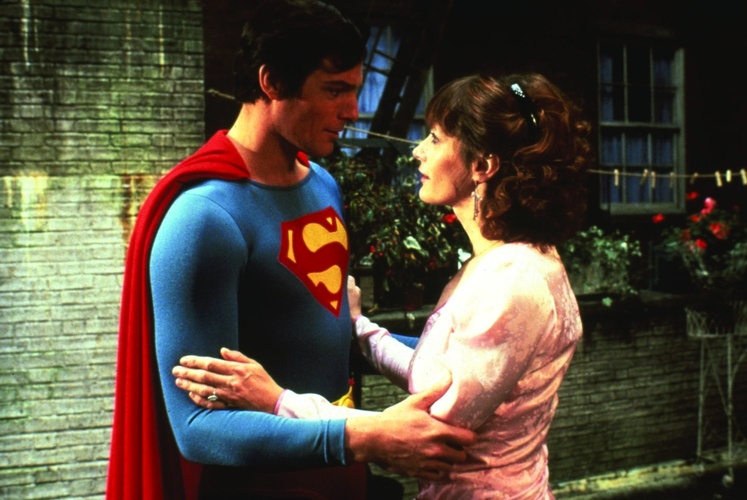
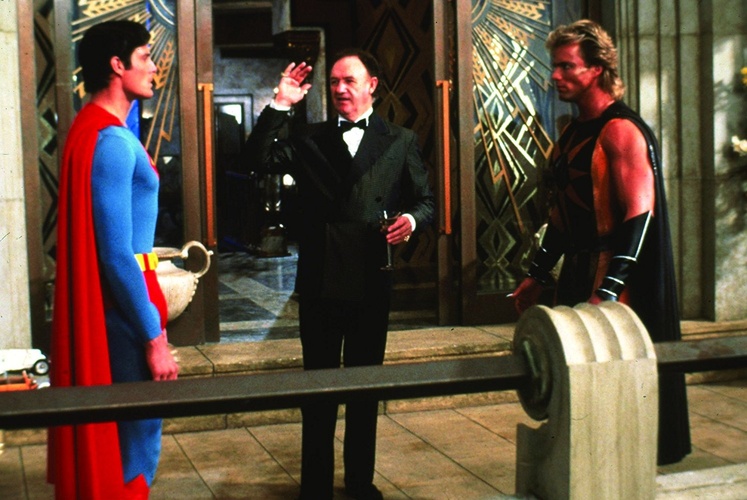
After learning of escalating tensions between the United States and the Soviet Union that could lead to a devastating nuclear war, Superman/Clark Kent (Christopher Reeve) decides he can no longer abstain from meddling in the affairs of Earth. Superman addresses the United Nations to announce that it is his moral responsibility to rid the world of nuclear weapons to prevent Earth's potential destruction. Meanwhile, Lex Luthor (Gene Hackman) escapes from prison with the help of his nephew, Lenny (Jon Cryer), and the pair use a stolen strand of Superman's hair to create a superhuman entity known as Nuclear Man (played by Mark Pillow, but with Hackman providing the voice). Superman's alter ego, Clark Kent, also contends with a change in leadership at the Daily Planet, as tabloid tycoon David Warfield (Sam Wanamaker) takes over and installs his daughter, Lacy (Mariel Hemingway), as the paper's editor, replacing Perry White (Jackie Cooper). Lacy immediately takes a shine to Clark, much to the annoyance of Lois Lane (Margot Kidder).
The internet is full of stories and information regarding the problematic production of Superman IV, as The Cannon Group slashed the budget from $36 million down to a paltry $17 million due to severe financial difficulties. According to co-writer Mark Rosenthal, The Cannon Group were pinching pennies at every step, with filming occurring in cheaper locations, and the producers even cut 45 minutes from the movie after a negative test screening. Cannon was in dire financial straits at the time, as they were producing too many movies simultaneously, and none of their recent productions had been big hits. Consequently, they could not afford to bankroll a major blockbuster like Superman, and the project received no special consideration. Even though Warner Bros. Pictures threw Cannon a $75 million financial lifeline to save the company from bankruptcy, Golan and Globus split the money among dozens of projects.
Instead of bringing back the special effects crews who worked on the previous Superman films, the penny-pinching producers hired cheaper Israeli crews, and the downgrade is wholly evident. Even though Superman II and Superman III have their share of shoddy compositing and cheesy special effects, Superman IV is even worse, as almost every SFX shot looks laughably unfinished. The human performers appear too bright compared to the backdrops, and the matte lines and edges of the blue and green screens are frequently visible. Additionally, large portions of Superman IV take place on bargain-basement sets that would not pass muster on a sitcom, such as the bunker from which Luthor launches the nuclear missile. Furthermore, instead of shooting in front of the very recognisable headquarters of the United Nations in New York for a crucial scene, Cannon opted to use an industrial park in England's Milton Keynes with limited extras and no set decoration apart from some pigeons.
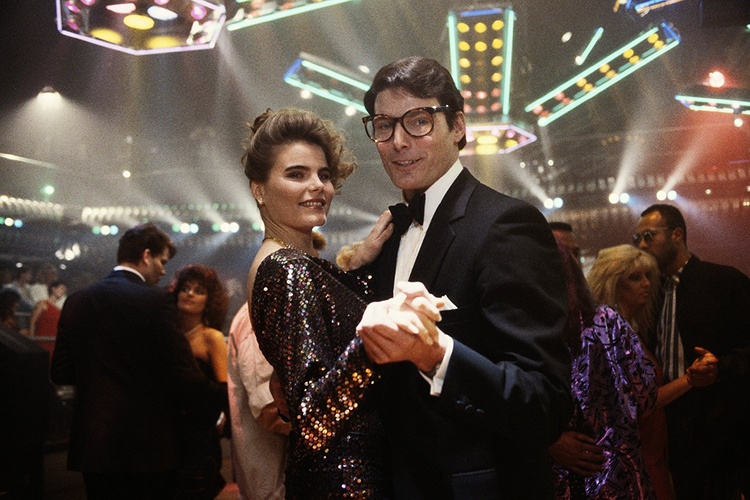
With neither Richard Donner nor Richard Lester returning for this instalment, Cannon chose to hire Sidney J. Furie to oversee the fourthquel, even though Reeve wanted Ron Howard. Furie is not a bad director, as he helmed several impressive titles during his career, including The Ipcress File, The Boys in Company C, and the horror film The Entity. However, with such limited resources, Superman IV is a startling bore, featuring sluggish action scenes that fail to generate even a modicum of excitement. Instead of enjoying the fights, you will be tempted to stare at your watch and simply wait for the scenes to end. Furthermore, Nuclear Man looks like a regular human in a cheesy suit rather than a superpowered threat. Nevertheless, the film does have its worthwhile moments from time to time, such as a double date scene when Clark is on a date with Lacy, accompanied by Lois and Superman. It is humorous to see the consistent switch between Clark and Superman, necessitating an arsenal of excuses to explain why they continue to disappear. Additionally, it is fun to see Superman and Lois flying over Metropolis together once again, but the janky compositing ruins the sequence. The scene also ends with Superman using the 'amnesia kiss' once again to make Lois forget that Clark is Superman, despite fans frequently criticising its initial use at the end of Superman II.
One of Superman IV's limited assets is the soundtrack. Thankfully, this sequel makes heavy use of John Williams's recognisable Superman music, and the resulting soundtrack is a significant improvement over Superman III. Alexander Courage receives a credit for "adapting" Williams's compositions, filling the movie with familiar motifs, from the iconic theme to the gentle music when Superman takes flight with Lois. Williams actually wrote a few new compositions for Superman IV but left the conducting to Courage. Parts of the soundtrack are cheesy, but the music is mostly solid. Additionally, a few special effects shots look reasonable, such as the space shuttle in the opening sequence, while the wire work for the flying scenes is also sufficiently convincing. At least Superman IV is not a complete bust from a technical perspective.
Reeve was hesitant about returning to his iconic role, but The Cannon Group tempted him back to the franchise by offering him an enormous payday ($6 million) and promising to finance his pet project, 1987's Street Smart. Despite the subpar production quality, Reeve gives it his all throughout Superman IV, treating the material with utmost earnestness, and he still looks fantastic in the red and blue suit with his muscular physique. The double act of the bumbling Clark and the confident Superman is as believable as ever, making it all the more depressing that this film features Reeve's final performance as the iconic superhero. Meanwhile, it's a thrill to see Gene Hackman and Margot Kidder return one final time, and the film gives Lois more to do after her reduced role in Superman III. Like Reeve, his co-stars approach the film with sincerity despite the depressing circumstances of the production. In terms of the newcomers, Jon Cryer (fresh from his role in 1986's Pretty in Pink) plays Luthor's nephew with some outrageous fashion choices. Decades later, Cryer went on to play Lex Luthor in the CW's Arrowverse.
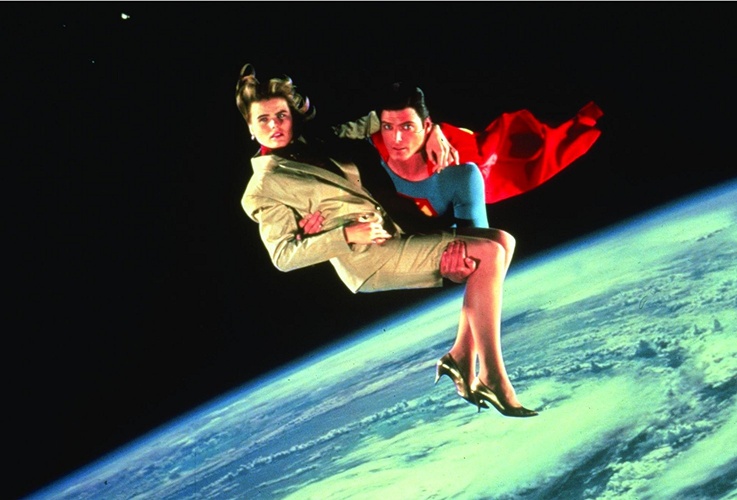
Superman IV: The Quest for Peace is a well-intentioned movie, as there is a timely message at the story's core, the returning cast members are excellent, Furie dials back the humour, and the decision to involve John Williams in the score is auspicious. It's not a detestable film by any stretch; instead, it's just disappointing and underwhelming. This reviewer typically enjoys B-grade titles produced by The Cannon Group, as goofy action films like Missing in Action, the Death Wish sequels, Cobra and The Delta Force are fun despite obvious budgetary shortcomings and cheesy scripts. Regrettably, Superman IV lacks the usual Cannon charm, as it does not deliver enough excitement to be considered a guilty pleasure. Superhero films require spectacle to compensate for any script or storytelling shortcomings, but there is no spectacle to behold here. It is heartbreaking to watch Reeve waste his time and talents on such subpar Superman sequels, as the actor deserved to lead a memorable and high-quality franchise. To repeat the sentiment I already expressed in my review of Superman III, fans can stick with Superman and Superman II: The Richard Donner Cut and ignore everything else.
4.1/10
