

 Login
Login
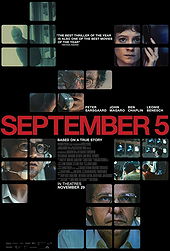
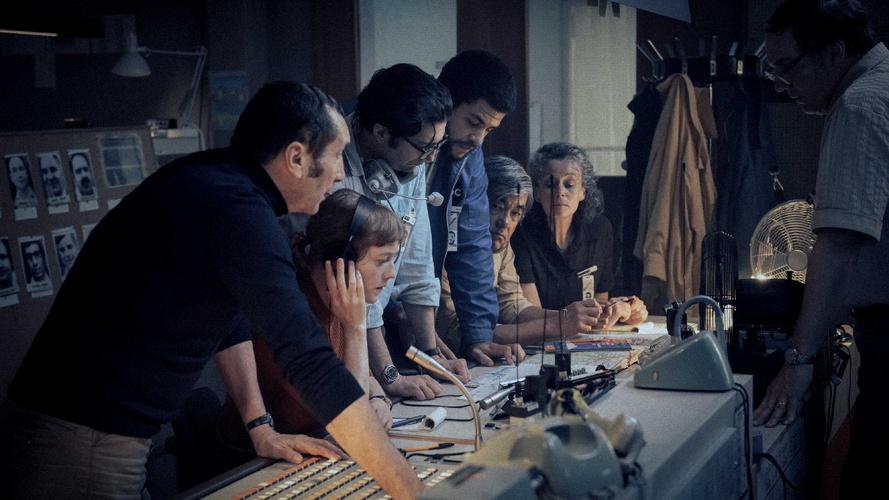
Optimism is high for Munich's 1972 Summer Olympic Games, with the West German government eagerly hosting the game to portray the country more favourably. The ABC Sports crew are in the country to cover the event, with channel president Roone Arledge (Peter Sarsgaard) and operational head Marvin Bader (Ben Chaplin) overseeing the complex technological task to televise the Olympic Games to the rest of the world. Stepping into the newsroom to continue orchestrating the live coverage is Geoffrey Mason (John Magaro), a rookie who is enthusiastic about becoming a director. When the team hears gunshots early in the night, they promptly investigate to find out what is happening, with local translator Marianne Gebhardt (Leonie Benesch) even listening to police radio broadcasts. Upon discovering that the Palestinian terrorist group Black September have taken the Israeli Olympic Team hostage, Mason scrambles to cover the event, facing broadcast cameras at the Olympic Village and covertly sending in a crewmember (Daniel Adeosun) to record 16mm footage from within athlete-only areas. With ransom demands coming out and a deadline approaching before the athletes lose their lives, the ABC Sports crew grapple with ethical considerations and limited satellite time as they try to maintain their coverage, with Mason desperately wanting to broadcast each scoop as it arrives.
Fehlbaum swiftly establishes the characters and their personalities before the crisis breaks out, ensuring viewers can easily discern who's who within the newsroom. An excellent cast tremendously aids the movie, and the lack of A-list superstars underscores that the performers were selected for their talent instead of their bankability. The likes of Sarsgaard and Chaplin make fantastic impressions, but Magaro (who was an extra in Spielberg's Munich) is arguably the star of the show, convincingly portraying confidence and nervousness throughout the ongoing situation. Since filming took place in Germany, the movie also features terrific European talent, with German actress Benesch making the most significant impression as a translator who is eventually assigned to help cover events on location.
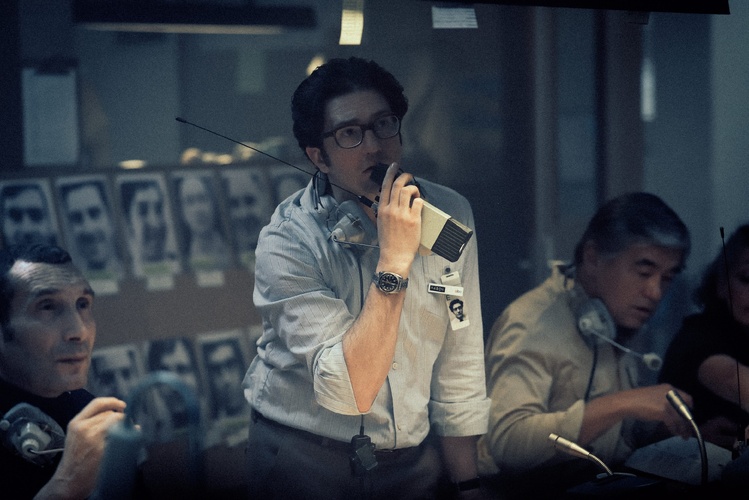
The production's verisimilitude is overwhelming, with September 5 featuring extensive archival footage from the event. Editor Hansjörg Weißbrich (She Said) effectively intercuts footage of the actors with actual news reports (ABC's Jim McKay features prominently in archival footage) and media coverage, including 16mm material shot by ABC camera operators from inside the Olympic Village as the hostage crisis unfolded. Fehlbaum does recreate some material out of respect for the victims, as the crew understandably felt it was inappropriate to include footage of the real terrorists or hostages. However, it is genuinely difficult to discern the difference between the dramatisations and the archival material, with an astonishing sense of authenticity pervading virtually every frame. Additionally, with the production team going to great lengths to recreate ABC's newsroom in Munich, the resulting set bursts with authenticity, from the low-res monitors and the cameras to the vintage headphones and playback equipment. September 5 never leaves the newsroom, but the scope does not feel disappointingly restrictive as the movie creates a sense of the bigger picture through the media coverage at the Olympic Village and later at the nearby military airport.
Cinematographer Markus Förderer (who worked with Fehlbaum on The Colony) captures the action with Paul Greengrass-esque immediacy, opting for steady, engrossing handheld photography that further solidifies the "you are there" illusion. Although Förderer shot September 5 with digital cameras, the use of specific vintage lenses to soften the footage, combined with precise colour grading and thick film grain, creates an astonishing illusion, as the picture looks like genuine celluloid instead of a digital approximation of 16mm film. Förderer also uses the newsroom monitors to remarkable effect, as the screens provide a distinct but not overwhelming lighting source in the cramped space, and the imagery on the monitors is often reflected in characters' glasses. With the movie coming in at a reasonable 94 minutes, September 5 does not outstay its welcome, and interest seldom wanes as Fehlbaum stages tense exchanges as the characters feel the pressure and grapple with the gravity of the crisis, with human fallibility also inevitably creeping in. The director even mines fascinating material from the behind-the-scenes workings of news broadcasting in the 1970s, from sharing satellite time with other networks to the analog method for adding captions to news footage.
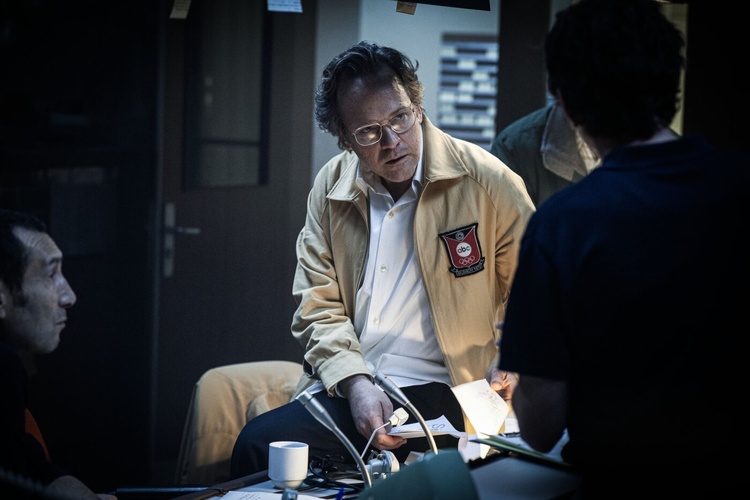
Understandably, the Israeli-Palestinian conflict makes the timing of September 5's release uncomfortable for some, particularly with the conflict causing much controversy and political unrest. However, Fehlbaum wisely avoids political grandstanding and condemnation, never using the material to make a statement on the ongoing Israel-Palestine conflict or draw clumsy parallels. Instead, September 5 is more about the ethical implications of broadcasting news that is shocking, violent and politically charged, with the crew emphasising the necessity for emotions over politics and discussing the possibility of on-air hostage executions and whether or not to broadcast unconfirmed reports, even with on-air caveats about the veracity of those rumours. Additional underlying themes relate to the Munich Olympic Games' significance, as the West German government hoped the event would provide catharsis after the Second World War by showing the country was eager to host other nations in a peaceful, democratic, uplifting setting. This material offers thought-provoking underpinnings to elevate the movie beyond a simple technical exercise. Instead of drab Oscar bait, September 5 is a sharp and thrilling feature brimming with anxious energy that recounts an important event from a compelling new perspective.
8.4/10
