

 Login
Login
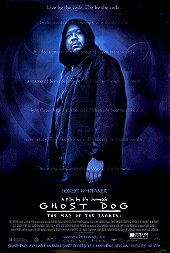

A contract killer for the local mafia, Ghost Dog (Forest Whitaker) lives in a shack on the roof of an empty building and adheres to the code of the samurai, applying wisdom from Yamamoto Tsunetomo's warrior manual Hagakure: The Book of the Samurai. Without a computer or telephone, he only communicates through homing pigeons, accepting assignments from a low-level Italian mobster, Louie (John Tormey), who saved Ghost Dog's life several years earlier. Ghost Dog follows Louie's orders by assassinating a local gangster, but the hit is complicated by the presence of Louise (Tricia Vessey), the daughter of mob boss Vargo (Henry Silva), who witnesses the murder. Fearing that loose ends will implicate them in the murder, Vargo and fellow gangster Sonny Valerio (Cliff Gorman) put out a contract on Ghost Dog despite nobody knowing what he looks like. With the lives of Ghost Dog and Louie in jeopardy, the hitman resolves to kill Vargo and his men.
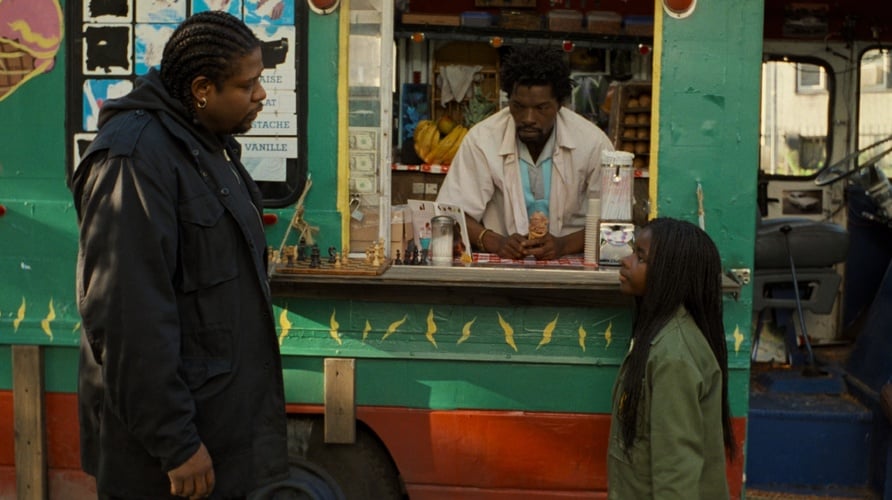
In between his violent pursuits, Ghost Dog develops a tender friendship with a young girl, Pearline (Camille Winbush), who also likes to read, and he frequently visits his best friend, a French-speaking ice cream vendor named Raymond (Isaach de Bankolé). Even though Raymond and Ghost Dog do not speak the same language and cannot understand what the other is saying, they still manage to communicate effectively. Additionally, Jarmusch infuses the picture with gallows humour and sharp wit, resulting in numerous unexpected moments of hilarity. Notable scenes include overweight Italian mobsters being so out of breath after scaling some stairs that they can barely function during a hit, and one elderly crime boss suffering a fatal heart attack before Ghost Dog has the chance to shoot him. Another amusing moment involves Ghost Dog assassinating a mobster by shooting him through a sink drain in a scene that homages Seijun Suzuki's 1967 film Branded to Kill.
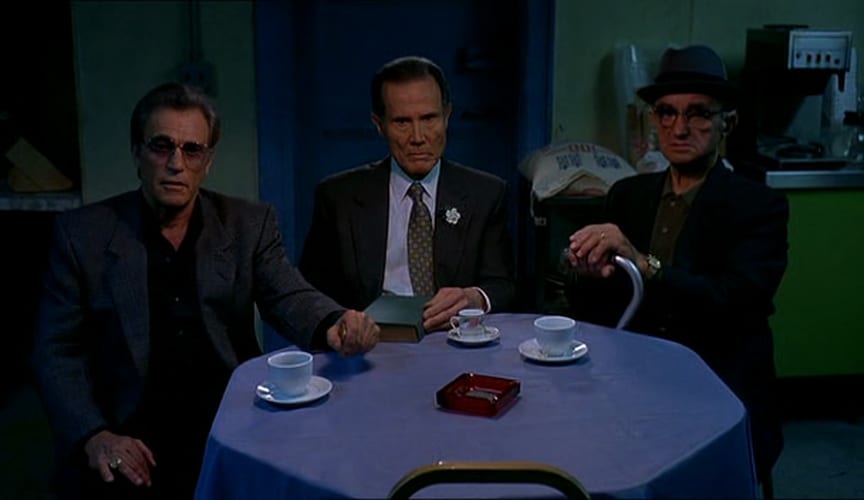
Ghost Dog's narrative is not airtight, with strained logic and contrivance leading the mob to order the hit on Ghost Dog despite his obvious value as a gun-for-hire. Thankfully, however, the strength of Jarmusch's direction and the terrific performances compensate for any illogical or unbelievable moments. Ghost Dog is essentially a character study of the titular hitman, and the director makes seemingly mundane activities fascinating to observe. Jarmusch spends ample time giving the character genuine dimension as he interacts with others and reads ancient literature, with Louise even giving the assassin a copy of the book Rashōmon. Jarmusch emphasises Ghost Dog's adherence to the samurai code by displaying on-screen passages of Hagakure, with Whitaker reading them out via a calming voiceover.
Jarmusch created Ghost Dog specifically for Forest Whitaker, and it is the actor's defining performance. Preparation for the role included extensive research and meditation as the actor immersed himself in the character's world to spiritually connect to the material, resulting in a credible and engaging portrayal of the titular assassin. Ghost Dog is a cold-blooded killer, yet Whitaker emanates warmth and humanity, looking convincing as an assassin and as a gentle man who likes to read and eat ice cream, making it difficult to imagine any other actor playing this part. Ghost Dog's methodical approach to assassinations makes this a fascinating character who normally uses creative and stealthy methods to dispose of his targets, though he also acquits himself admirably when storming a mansion full of mafiosos. Jarmusch even underscores Ghost Dog's knowledge and reverence for ancient cultures by showing him confronting a pair of racist hunters on the side of the road who killed a bear. Other performances from the ensemble are equally effective, with the gangsters walking and talking like characters from The Sopranos or a Martin Scorsese movie.
Belying its meagre $2 million budget, Ghost Dog carries an outstanding visual gravitas, making it look more appealing than productions that cost three or four times as much. Jarmusch exudes an exceptional command of the material, perpetually maintaining interest despite the deliberately ponderous pace. Jarmusch keeps the action beats short, sharp, shocking, and violent, with practical blood squibs adding a visceral edge to these scenes. The director also appreciates the value of pauses and moments of silence - by design, this is not a high-energy action flick. Furthermore, with production taking place in New Jersey, Ghost Dog is thick on atmosphere, with every location feeling wholly authentic instead of manufactured or phoney. The gorgeously stylish 35mm cinematography (courtesy of acclaimed Dutch cinematographer Robby Müller) further contributes to the breathtaking sense of atmosphere, as nothing feels like the work of green screen, soundstages or obvious digital trickery. RZA's accompanying hip-hop-infused original score and other soundtrack choices (including reggae songs) add another layer to Jarmusch's distinctive audiovisual approach to the production, ensuring that Ghost Dog feels like something far more than a disposable, run-of-the-mill B-movie. Although fundamentally an arthouse movie, Ghost Dog: The Way of the Samurai does not feel like drab homework.
8.8/10
