

 Login
Login
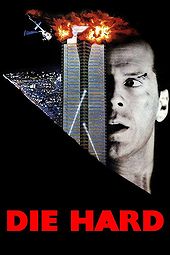
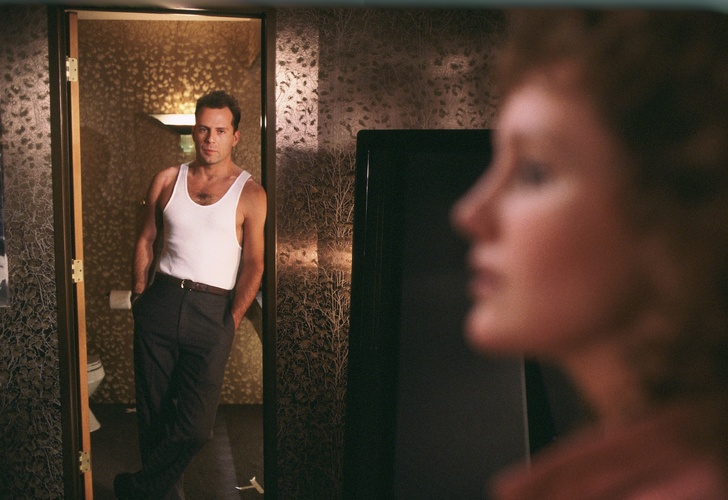
On Christmas Eve, NYPD detective John McClane (Bruce Willis) arrives in Los Angeles to reconcile with his estranged wife, Holly (Bonnie Bedelia), during her corporate holiday party at the high-rise Nakatomi Plaza in Century City. When Hans Gruber (Alan Rickman) - a calculating, silk-voiced thief disguised as a terrorist - and his crew seize the building and take the party guests hostage, McClane manages to slip away unnoticed, and he soon begins dismantling the operation from the inside by killing Gruber's men one by one. McClane manages to gain the attention of the local authorities, including street cop Al Powell (Reginald VelJohnson) and LAPD Deputy Chief Dwayne T. Robinson (Paul Gleason).
Much of today's action-movie shorthand traces back to Die Hard: the lone hero outgunned in a confined space, the brilliantly articulate villain, the sceptical authorities, and the everyman cop who becomes the hero's lifeline. The film codified these tropes by executing them with uncommon precision.
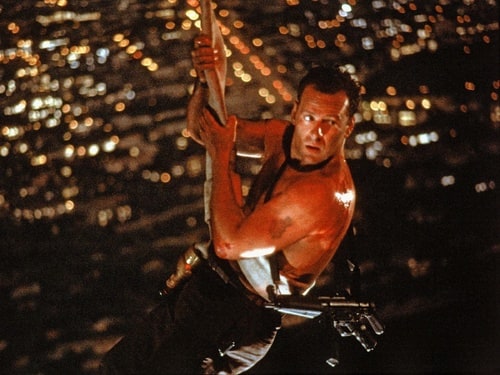
Die Hard started life as the 1979 novel, Nothing Lasts Forever, a sequel to Roderick Thorp's 1966 novel, The Detective. Frank Sinatra starred in the film adaptation of The Detective, but the aging singer turned down the opportunity to reprise the role for a prospective movie version of Nothing Lasts Forever. Screenwriters Jeb Stuart and Steven E. de Souza worked to reshape the novel into a screenplay, significantly deviating from the source material as they updated the protagonist, softened the story's bleakness, and injected sharper humour. Another key detail was to change Gruber's crew into thieves masquerading as terrorists, whereas the novel depicted them as terrorists with political motives. McTiernan felt that terrorism - with ideological motives and mass-casualty intent - would make the film grim, heavy, and morally suffocating. The director, instead, wanted Die Hard to be thrilling, witty, and fun, crafting a more populist, buoyant version of Thorp's grim thriller.
The action throughout Die Hard carries a tactile intensity that still holds up after nearly four decades. Instead of glossy, hyper-stylised combat, McTiernan stages cramped, sweaty confrontations where every punch lands with coarse realism, and no kill comes easily. Glass shreds bare feet, gunshots rupture the silence with concussive force, and the film builds tension by making each encounter feel like it might be McClane's last. McTiernan shrewdly uses the R rating, as the visceral bloodshed carries genuine impact without feeling cheap or exploitative. Modern action may be louder and more acrobatic, but Die Hard's practicality feels more dangerous.
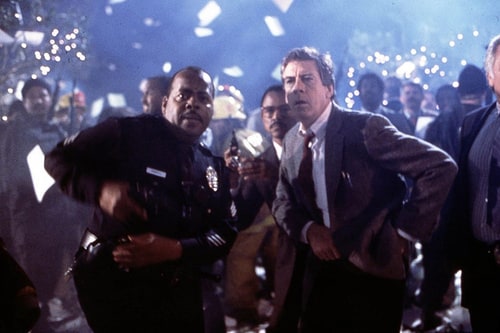
The craft behind the camera remains formidable. Jan de Bont's kinetic cinematography captures the building's vertiginous scale and the grit coating every mechanical duct and shattered office. The practical effects - explosions, stunts, miniatures, and pyrotechnics that earned an Oscar nomination - retain a weight that digital substitutes rarely match. Additionally, Michael Kamen's score pulses with nervous energy, deepening the suspense without drowning it in sentimentality. Editors John F. Link and Frank J. Urioste also keep the pace tight, shaping the escalating chaos into a coherent, engaging rhythm.
Willis's John McClane became an instant icon because he defied the era's muscle-bound norm. Standing in stark contrast to the likes of John Matrix, McClane bleeds, panics, improvises, and doubts himself. Willis fuses sardonic humour with palpable desperation, crafting a hero who fights as much with wits as with brute force. The actor also anchors the film with charisma and emotional texture, especially in moments where fear punctures his bravado. 20th Century Fox took a massive gamble on Willis, a television star at the time (he was famous for Moonlighting) who commanded a $5 million paycheque - a sum the studio only agreed to pay because they desperately needed a summer action film for 1988 and every other notable actor passed on the role, including Clint Eastwood, Harrison Ford, Mel Gibson, James Caan, and Al Pacino.
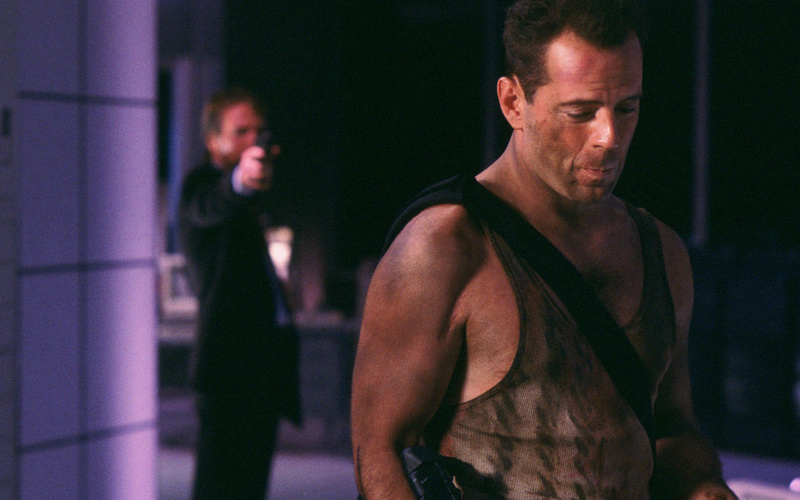
The iconic Alan Rickman, who made his film debut here in his 40s after years of theatre and TV work, is another undeniable standout. Hans Gruber remains one of cinema's most magnetic villains - urbane, strategic, and quietly amused by the carnage he orchestrates. Meanwhile, Reginald VelJohnson brings warmth as the beat cop who becomes McClane’s unlikely partner - their interactions over the radio sparkle with wit and, in a few late scenes, incredible emotion. Also in the cast is Bonnie Bedelia, who gives Holly sharp intelligence and emotional authority, ensuring she does not come across as another simple damsel in distress. Even the minor characters feel distinct and lived-in, including De'voreaux White as the bright, chirpy limo driver, Argyle, and William Atherton (Ghostbusters) as arrogant journalist Richard Thornburg.
In addition to being one of cinema's best action films, Die Hard is also one of the greatest Christmas movies of all time. Despite decades of playful debate, Die Hard absolutely qualifies as a Christmas film. After all, its entire narrative is anchored to Christmas Eve, and the holiday informs everything from its setting to its themes: reconciliation, renewal, generosity, and the importance of family. McTiernan constantly weaves in Christmas imagery and music - "Let It Snow," "Ode to Joy," tinsel-wrapped explosives, and even McClane's sardonic proclamation of "Now I have a machine gun. Ho-ho-ho." Additionally, the story's emotional engine is a man fighting to mend his marriage in time for the holiday. Die Hard uses Christmas not as a mere backdrop but as a framing device that shapes both the action and McClane's character arc, making it, undeniably, a Christmas movie.
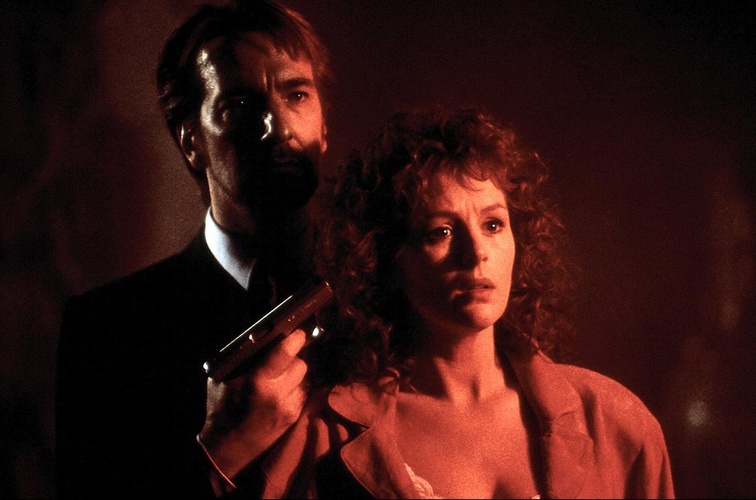
Nearly four decades later, Die Hard endures because it effectively marries high-stakes spectacle with human stakes. Its cinematic imitators copy its setup but rarely match its blend of tension, personality, and craftsmanship. The film earns its reputation as one of the greatest action movies ever made, not through nostalgia, but through the elegant execution and the portrayal of a hero who feels real enough to root for. If you crave action that respects intelligence as much as adrenaline, Die Hard remains essential viewing - an endlessly rewatchable landmark that still outpaces all of its descendants.
10/10


