Description:
Lionel Atwill was born into a wealthy family and was educated at London's prestigious Mercer School to become an architect, but his interest turned to the stage. He worked his way progressively into the craft and debuted at age 20 at the Garrick Theatre in London. He acted and improved regularly thereafter, especially in the plays of Henrik Ibsen and George Bernard Shaw. Atwill came to the US in 1915 and would appear in some 25 plays on Broadway between 1917 and 1931, but he was already trying his hand in silent films by 1918. He had a sonorous voice and dictatorial British accent that served him well for the stage and just as w
Lionel Atwill was born into a wealthy family and was educated at London's prestigious Mercer School to become an architect, but his interest turned to the stage. He worked his way progressively into the craft and debuted at age 20 at the Garrick Theatre in London. He acted and improved regularly thereafter, especially in the plays of Henrik Ibsen and George Bernard Shaw. Atwill came to the US in 1915 and would appear in some 25 plays on Broadway between 1917 and 1931, but he was already trying his hand in silent films by 1918. He had a sonorous voice and dictatorial British accent that served him well for the stage and just as well for sound movies. He did some Vitaphone short subjects in 1928 and then his first real film role in The Silent Witness (1932) (also titled "The Verdict").
That voice and his bullish demeanor made Atwill a natural for a spectrum of tough-customer roles. As shady noblemen and mad doctors, but also gruff military men and police inspectors (usually with a signature mustache), he worked steadily through the 1930s. He had the chance to show a broader character as the tyrannical but unforgettable Col. Bishop in Captain Blood (1935). It's hard to forget his Inspector Krogh in Son of Frankenstein (1939), wherein he agrees to a game of darts with Basil Rathbone and proceeds to impale the darts through the right sleeve of his uniform (the character sported a wooden right arm). And he sends himself up with rolling and blustering dialogue as the glory-hog ham stage actor Rawitch in the classic To Be or Not to Be (1942) with Jack Benny. However, Atwill effectively ruined his burgeoning film career in 1943 after he was implicated in what was described as an "orgy" at his home, naked guests and pornographic films included--and a rape perpetrated during the proceedings. Atwill "lied like a gentleman," it was said, in the court proceedings to protect the identities of his guests and was convicted of perjury and sentenced to five years' probation.
He was thereafter kept employed on Poverty Row with only brief periods of employment by Universal Pictures, while the rest of Hollywood turned its collective back on him. He is more remembered for the horror films generally than for better efforts, but they have fueled his continued popularity and a bid by the Southern California Lionel Atwill Fan Club to petition for a Hollywood Blvd. star (he never received one).
- IMDb mini biography by: William McPeak
On October 14, 1942, Lionel Atwill was sentenced to five years' probation on a perjury conviction stemming from his grand jury testimony the previous year on a morals charge stemming from his showing pornographic movies to party goers at his home during his 1940 Christmas party. Atwill, the victim of an attempted shakedown, admitted he lied to an earlier grand jury. Seven months into his sentence he applied for, and was granted, termination of his sentence and his record was expunged. Unfortunately for Atwill, the Hays Office was a different matter. He'd been unemployed during his sentence, his wealthy wife Louise (the ex-wife of Douglas MacArthur) divorced him in June 1943, and he no longer felt welcome in Hollywood. Atwill spent weeks looking for roles on Broadway without success and limped back west, where he managed to gain employment at the one studio that specialized in hiring fallen name (and no-name) talent on the cheap, Producers Releasing Corporation. The very definition of Poverty Row, PRC was a far cry from his glory days at the major studios. Along Gower Gulch, "features" were usually allotted a five-day shooting schedule and retakes were forbidden. Although Atwill was able to return sporadically to Universal for some bits and serials, he was condemned to spending the remainder of his life working in Poverty Row. Atwill died of lung cancer while working on a quickie serial, Lost City of the Jungle (1946).
... (more)
(less)
Tags: British (2), Actor (2), Born 1885 (2), Died 1946 (2), Movies (1), 1930s (1), 1940s (1), Male (1), Supporting Actor (1), Lead Actor (1), Died Aged 61 (1), Horror Icon (1), Horror Film Actor (1), Silent Actor (1)
My tags:
 Add tags


 Login
Login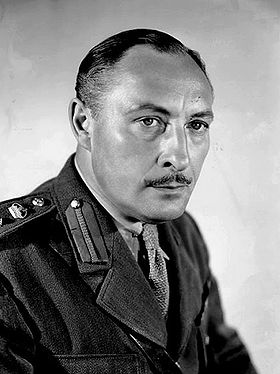


 United Kingdom
 9 comments


