

 Login
LoginFairouz
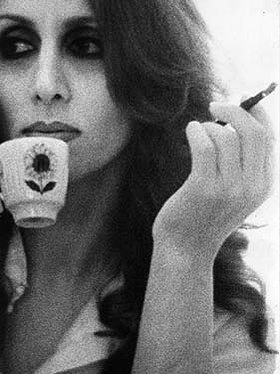


Stats
Birth Name: Nouhad Hadad
Age: 90, born 21 November 1935
Country of origin:  Lebanon
Currently Residing In: Lebanon
Height: 5' 7"
Relationship Status: Married
Partner: Assi al Rohbani
Photos
 2 votes
 1 vote
 1 vote
 1 vote
 1 vote
View all Fairouz pictures
Description:
1935-1950s - The early years
Fairuz (Nouhad Haddad) with her mother Liza al-Boustani, crossing Martyrs' Square, Beirut in Beirut, 1945.
See Timeline of Fairuz. Nouhad Haddad was born on 21 November 1935 in Jabal al Arz, Lebanon into a Syriac Maronite Christian family.The family later moved into a home in cobblestone alley called 'Zuqaq el Blatt' in Beirut. Living in a single room of a typical Lebanese stone house facing Beirut's Patriarchate school, they shared a kitchen with the neighbours. Her father Wadīʿ was from Mardin and of the Syriac Orthodox faith,and worked as a typesetter in a print shop.Lisa, her mother, stay
1935-1950s - The early years
Fairuz (Nouhad Haddad) with her mother Liza al-Boustani, crossing Martyrs' Square, Beirut in Beirut, 1945.
See Timeline of Fairuz. Nouhad Haddad was born on 21 November 1935 in Jabal al Arz, Lebanon into a Syriac Maronite Christian family.The family later moved into a home in cobblestone alley called 'Zuqaq el Blatt' in Beirut. Living in a single room of a typical Lebanese stone house facing Beirut's Patriarchate school, they shared a kitchen with the neighbours. Her father Wadīʿ was from Mardin and of the Syriac Orthodox faith,and worked as a typesetter in a print shop.Lisa, her mother, stayed home and took care of her four children, Nouhad, Youssef, Hoda and Amal.
Nouhad was a shy child and did not have many friends at school. However, she was very attached to her grandmother who lived in Debbieh (Shuf area), where Nouhad used to spend her summer holidays. Nouhad seemed to enjoy the rural village life. During the day, Nouhad would help her grandmother with house chores and fetch fresh water from a nearby water spring. She would sing all the way to the spring and back. In the evening, Nouhad would sit by the candle light with her grandmother, who would tell her stories.
Fairuz in 1946.
By the age of ten, Nouhad was already known at school for her unusual singing voice. She would sing regularly during school shows and on holidays. This was how she came to the attention of Mohammed Fleyfel, a well known musician and a teacher at the Lebanese Conservatory, who happened to attend one of the school's shows in February 1950. Impressed by her voice and performance, he advised her to enroll in the conservatory, which she did. At first, Nouhad's conservative father was reluctant to send her to the conservatory; however, he eventually allowed her to go on condition that her brother accompany her. That having been said, Nouhad's family as a whole encouraged her in her musical career.
Mohammed Fleyfel took a close interest in Nouhad's talent. Among other things, he taught her to recite verses from the Koran (in the Recitative style known as Tajweed). On one occasion, Nouhad was heard singing by Halim el Roumi, head of the Lebanese Radio Station and a prominent musician in his own right (also the father of the famous Lebanese singer Majida Roumi). Roumi was impressed by her voice and noticed that it had a rare flexibility that allowed her to sing both Arabic and Western modes admirably. At Nouhad's request, El Roumi appointed her as a chorus singer at the radio station in Beirut and went on to compose several songs for her. He chose for her the stage name Fairuz, which is the Arabic word for turquoise.
Fairuz and Assi Rahbani on their wedding day surrounded by members of their families, 1955.
A short while later, Fairuz was introduced to the Rahbani brothers, Assi and Mansour, who also worked at the radio station as musicians. The chemistry was instant, and soon after, Assi started to compose songs for Fairouz, one of which was 'Itab (the third song he composed for her), which was an immediate smash hit in all of the Arab world, establishing Fairuz as one of the most prominent Arab singers on the Arabic music scene. Assi and Fairuz were married on 23 January 1955, and Fairuz then converted to Greek Orthodoxy (Assi's faith).[14]
Fairuz and Assi had four children: Ziad, a musician and a composer, Layal (died in 1987 of a brain stroke), Hali (paralysed since early childhood after meningitis) and Rima, a photographer and film director.
Fairuz's first large-scale concert took place in 1957 as part of the Baalbeck International Festival,which took place under the patronage of then President of Lebanon Camille Chamoun, and where she performed alongside the British prima ballerina Beryl Goldwyn and the Ballet Rambert. Fairuz was paid one Lebanese pound for that show. Musical operettas and concerts followed for many years, eventually establishing Fairuz as one of the most popular singers in Lebanon and throughout the Arab world.
[edit]1960s - The establishment of a new star
As the 1960s wore on, Fairuz became known as the "First Lady of Lebanese singing", as Halim Roumi dubbed her. During this period the Rahbani brothers wrote and composed for her hundreds of famous songs, most of their operettas, and 3 motion pictures.
In 1969, Fairuz's songs were banned from the radio stations in Lebanon for six months because she refused to sing at a private concert in honour of Algerian President Houari Boumedienne. The incident only served to increase her popularity. Fairuz made it clear then and since that while always willing to sing to her public and to various countries and regions, she would never sing to any individual.
[edit]1970s - International fame and the Lebanese Civil War
In 1971, Fairuz's fame became international after her major North American tour, which was received with much excitement by the Arab-American and American community and yielded very positive reviews of the concerts.
On September 22, 1972, Assi suffered a brain hemorrhage and was rushed to the hospital. Fans crowded outside the hospital praying for him and lighting candles. After three surgeries, Assi's brain hemorrhage was halted. Ziad Rahbani, the eldest son of Fairuz and Assi, at age 16, gave his mother the music of one of his unreleased songs "Akhadou el Helween" (that he had composed to be sung by Marwan Mahfouz in "Sahriyyi" Ziad's first play) and his uncle Mansour Rahbani re-wrote new lyrics for it to be called "Saalouni n'Nass" (The People Asked Me) which talked about Fayrouz being on stage for the first time without Assi. Three months after suffering the hemorrhage, Assi attended the premiere performance of that musical "Al Mahatta" in Piccadilly Theatre on Hamra Street. Elias Rahbani, Assi's younger brother, took over the orchestration and musical arrangement for the performance.
Within a year, Assi had returned to composing and writing with his brother. They continued to produce musicals, which became increasingly political in nature. After the Lebanese Civil War erupted, the brothers continued to use political satire and sharp criticism in their plays. In 1977, their musical "Petra" was shown in both the Muslim western and Christian eastern portions of Beirut.
In 1978, the trio toured Europe and the Persian Gulf nations, including a concert at the Paris Olympia. As a result of this busy schedule, Assi’s medical and mental health began to deteriorate. Fairuz and the brothers agreed to end their professional and personal relationship in 1979. Fairuz began to work with a production team helmed by her son, Ziad Rahbani, and Assi and Mansour composed for other artists such as Ronza.
During the Lebanese Civil War (1975–1990), Fairuz never left Lebanon to live abroad and did not hold any concerts there with the exception of the stage performance of the operetta "Petra", which was performed in both the Western and Eastern parts of the then-divided Beirut in 1978. However, during that time period, Fairuz held many very successful and record-breaking concerts and tours in numerous countries around the world.
She made her first European TV appearance on French TV on May 24, 1975, in a "Carpentier special show" called "Numero 1" dedicated to French star Mireille Mathieu. She sang one of her big hits "Habbaytak Bissayf" and was thanked and embraced after performing it by Mireille Mathieu.
[edit]1980s - A new production team
After the artistic divorce between Fairouz and the Rahbani Brothers in 1979, Fairuz carried on with her son, composer Ziad Rahbani, his friend the lyricist Joseph Harb, and composer Philemon Wehbe.
Fairuz made a second and final European Television appearance on French TV on the 13 October 1988 in a show called Du côté de chez Fred. Fairuz, who had scheduled a concert at the POPB of Paris Bercy concert hall three days later on 16 October, was the main guest of French TV presenter Frédéric Mitterrand, today France's Minister of Culture (2009). The program features footage of her rehearsals for her concert at Bercy in addition to the ceremony featuring then French Minister of Culture Jack Lang awarding Fairuz the medal of "Commandeur des Arts et des Lettres". It also includes a video montage of her previous movies and concerts. In that show, Fairuz also sang the three songs "Ya hourrié", "Yara" and "Zaali tawwal".
[edit]1990s–present
Excerpt from the cantata "Ihtarif El-Huzn Wal Intizar"
A music sample of Fairuz's voice; recorded for the Jordanian radio station (1969)
Problems listening to this file? See media help.
In the 1990s, Fairuz produced six albums (two Philemon Wehbe tributes with unreleased tracks included, a Zaki Nassif album, three Ziad Rahbani albums, and a tribute album to Assi Rahbani orchestrated by Ziad) and held a number of large-scale concerts, most notably the historic concert held at Beirut's Martyr's Square in September, 1994 to launch the rebirth of the downtown district that was ravaged by the civil war. She appeared at the Baalbeck International Festival in 1998 after 25 years of self imposed absence where she performed the highlights of three very successful plays that were presented in the 1960s and 1970s.
She also performed a concert at the Las Vegas MGM Grand Arena in 1999 which was attended by over 16,000 spectators, mostly Arabs. Ever since, Fairuz has held sold out concerts at the Beiteddine International Festival (Lebanon) from 2000 to 2003, Kuwait (2001), Paris (2002), the United States (2003), Amman (2004), Montreal (2005), Dubai, Abu Dhabi, Baalbeck, BIEL (2006), Athens,[17] Amman (2007) Damascus, and Bahrain (2008).
Fairuz now works exclusively with her composer son Ziad. Her first album in the new millenium "Wala Keef", was released in 2002.
Her 2008 performance in Damascus caused considerable controversy in Lebanon, given the tense relationship between Lebanon and Syria. Several members of parliament publicly asked her to cancel the concert.[18] She went to Syria where she was received by a crowd of 7000 fans, screaming her name at the borders, as her car passed into Syrian grounds. Mosques and prayers on radio were all held back as Fairouz's songs played day and night through almost every media outlet in the Syrian nation. Radio channels, TV channels, the Syrian satellite broadcasters, restaurants and cafes, and newspapers were all focused on Fairouz's legendary return after 20 years absence. However big this controversy was, it seems it has not affected her popularity in Lebanon as she held the Orthodox Good Friday Prayer Mass in West Beirut as hundreds and hundreds crowded the church premises.
Fairuz's new album titled "Eh... Fi Amal" was released on the 7th of October 2010, produced by Fairuz productions and written entirely by Ziad Rahbani. Two concerts took place at BIEL Center in Beirut, Lebanon on the 7th and 8 October. Fairouz’s last appearance in Beirut was in December 2006 during the re-make of the play “Sah El Nom” by the Rahbani brothers. Later a concert in Bahrain was cancelled in March 2011. She preformed in Netherlands for the first time in Amsterdam on the 26 June 2011. ... (more) (less)
Fairuz (Nouhad Haddad) with her mother Liza al-Boustani, crossing Martyrs' Square, Beirut in Beirut, 1945.
See Timeline of Fairuz. Nouhad Haddad was born on 21 November 1935 in Jabal al Arz, Lebanon into a Syriac Maronite Christian family.The family later moved into a home in cobblestone alley called 'Zuqaq el Blatt' in Beirut. Living in a single room of a typical Lebanese stone house facing Beirut's Patriarchate school, they shared a kitchen with the neighbours. Her father Wadīʿ was from Mardin and of the Syriac Orthodox faith,and worked as a typesetter in a print shop.Lisa, her mother, stayed home and took care of her four children, Nouhad, Youssef, Hoda and Amal.
Nouhad was a shy child and did not have many friends at school. However, she was very attached to her grandmother who lived in Debbieh (Shuf area), where Nouhad used to spend her summer holidays. Nouhad seemed to enjoy the rural village life. During the day, Nouhad would help her grandmother with house chores and fetch fresh water from a nearby water spring. She would sing all the way to the spring and back. In the evening, Nouhad would sit by the candle light with her grandmother, who would tell her stories.
Fairuz in 1946.
By the age of ten, Nouhad was already known at school for her unusual singing voice. She would sing regularly during school shows and on holidays. This was how she came to the attention of Mohammed Fleyfel, a well known musician and a teacher at the Lebanese Conservatory, who happened to attend one of the school's shows in February 1950. Impressed by her voice and performance, he advised her to enroll in the conservatory, which she did. At first, Nouhad's conservative father was reluctant to send her to the conservatory; however, he eventually allowed her to go on condition that her brother accompany her. That having been said, Nouhad's family as a whole encouraged her in her musical career.
Mohammed Fleyfel took a close interest in Nouhad's talent. Among other things, he taught her to recite verses from the Koran (in the Recitative style known as Tajweed). On one occasion, Nouhad was heard singing by Halim el Roumi, head of the Lebanese Radio Station and a prominent musician in his own right (also the father of the famous Lebanese singer Majida Roumi). Roumi was impressed by her voice and noticed that it had a rare flexibility that allowed her to sing both Arabic and Western modes admirably. At Nouhad's request, El Roumi appointed her as a chorus singer at the radio station in Beirut and went on to compose several songs for her. He chose for her the stage name Fairuz, which is the Arabic word for turquoise.
Fairuz and Assi Rahbani on their wedding day surrounded by members of their families, 1955.
A short while later, Fairuz was introduced to the Rahbani brothers, Assi and Mansour, who also worked at the radio station as musicians. The chemistry was instant, and soon after, Assi started to compose songs for Fairouz, one of which was 'Itab (the third song he composed for her), which was an immediate smash hit in all of the Arab world, establishing Fairuz as one of the most prominent Arab singers on the Arabic music scene. Assi and Fairuz were married on 23 January 1955, and Fairuz then converted to Greek Orthodoxy (Assi's faith).[14]
Fairuz and Assi had four children: Ziad, a musician and a composer, Layal (died in 1987 of a brain stroke), Hali (paralysed since early childhood after meningitis) and Rima, a photographer and film director.
Fairuz's first large-scale concert took place in 1957 as part of the Baalbeck International Festival,which took place under the patronage of then President of Lebanon Camille Chamoun, and where she performed alongside the British prima ballerina Beryl Goldwyn and the Ballet Rambert. Fairuz was paid one Lebanese pound for that show. Musical operettas and concerts followed for many years, eventually establishing Fairuz as one of the most popular singers in Lebanon and throughout the Arab world.
[edit]1960s - The establishment of a new star
As the 1960s wore on, Fairuz became known as the "First Lady of Lebanese singing", as Halim Roumi dubbed her. During this period the Rahbani brothers wrote and composed for her hundreds of famous songs, most of their operettas, and 3 motion pictures.
In 1969, Fairuz's songs were banned from the radio stations in Lebanon for six months because she refused to sing at a private concert in honour of Algerian President Houari Boumedienne. The incident only served to increase her popularity. Fairuz made it clear then and since that while always willing to sing to her public and to various countries and regions, she would never sing to any individual.
[edit]1970s - International fame and the Lebanese Civil War
In 1971, Fairuz's fame became international after her major North American tour, which was received with much excitement by the Arab-American and American community and yielded very positive reviews of the concerts.
On September 22, 1972, Assi suffered a brain hemorrhage and was rushed to the hospital. Fans crowded outside the hospital praying for him and lighting candles. After three surgeries, Assi's brain hemorrhage was halted. Ziad Rahbani, the eldest son of Fairuz and Assi, at age 16, gave his mother the music of one of his unreleased songs "Akhadou el Helween" (that he had composed to be sung by Marwan Mahfouz in "Sahriyyi" Ziad's first play) and his uncle Mansour Rahbani re-wrote new lyrics for it to be called "Saalouni n'Nass" (The People Asked Me) which talked about Fayrouz being on stage for the first time without Assi. Three months after suffering the hemorrhage, Assi attended the premiere performance of that musical "Al Mahatta" in Piccadilly Theatre on Hamra Street. Elias Rahbani, Assi's younger brother, took over the orchestration and musical arrangement for the performance.
Within a year, Assi had returned to composing and writing with his brother. They continued to produce musicals, which became increasingly political in nature. After the Lebanese Civil War erupted, the brothers continued to use political satire and sharp criticism in their plays. In 1977, their musical "Petra" was shown in both the Muslim western and Christian eastern portions of Beirut.
In 1978, the trio toured Europe and the Persian Gulf nations, including a concert at the Paris Olympia. As a result of this busy schedule, Assi’s medical and mental health began to deteriorate. Fairuz and the brothers agreed to end their professional and personal relationship in 1979. Fairuz began to work with a production team helmed by her son, Ziad Rahbani, and Assi and Mansour composed for other artists such as Ronza.
During the Lebanese Civil War (1975–1990), Fairuz never left Lebanon to live abroad and did not hold any concerts there with the exception of the stage performance of the operetta "Petra", which was performed in both the Western and Eastern parts of the then-divided Beirut in 1978. However, during that time period, Fairuz held many very successful and record-breaking concerts and tours in numerous countries around the world.
She made her first European TV appearance on French TV on May 24, 1975, in a "Carpentier special show" called "Numero 1" dedicated to French star Mireille Mathieu. She sang one of her big hits "Habbaytak Bissayf" and was thanked and embraced after performing it by Mireille Mathieu.
[edit]1980s - A new production team
After the artistic divorce between Fairouz and the Rahbani Brothers in 1979, Fairuz carried on with her son, composer Ziad Rahbani, his friend the lyricist Joseph Harb, and composer Philemon Wehbe.
Fairuz made a second and final European Television appearance on French TV on the 13 October 1988 in a show called Du côté de chez Fred. Fairuz, who had scheduled a concert at the POPB of Paris Bercy concert hall three days later on 16 October, was the main guest of French TV presenter Frédéric Mitterrand, today France's Minister of Culture (2009). The program features footage of her rehearsals for her concert at Bercy in addition to the ceremony featuring then French Minister of Culture Jack Lang awarding Fairuz the medal of "Commandeur des Arts et des Lettres". It also includes a video montage of her previous movies and concerts. In that show, Fairuz also sang the three songs "Ya hourrié", "Yara" and "Zaali tawwal".
[edit]1990s–present
Excerpt from the cantata "Ihtarif El-Huzn Wal Intizar"
A music sample of Fairuz's voice; recorded for the Jordanian radio station (1969)
Problems listening to this file? See media help.
In the 1990s, Fairuz produced six albums (two Philemon Wehbe tributes with unreleased tracks included, a Zaki Nassif album, three Ziad Rahbani albums, and a tribute album to Assi Rahbani orchestrated by Ziad) and held a number of large-scale concerts, most notably the historic concert held at Beirut's Martyr's Square in September, 1994 to launch the rebirth of the downtown district that was ravaged by the civil war. She appeared at the Baalbeck International Festival in 1998 after 25 years of self imposed absence where she performed the highlights of three very successful plays that were presented in the 1960s and 1970s.
She also performed a concert at the Las Vegas MGM Grand Arena in 1999 which was attended by over 16,000 spectators, mostly Arabs. Ever since, Fairuz has held sold out concerts at the Beiteddine International Festival (Lebanon) from 2000 to 2003, Kuwait (2001), Paris (2002), the United States (2003), Amman (2004), Montreal (2005), Dubai, Abu Dhabi, Baalbeck, BIEL (2006), Athens,[17] Amman (2007) Damascus, and Bahrain (2008).
Fairuz now works exclusively with her composer son Ziad. Her first album in the new millenium "Wala Keef", was released in 2002.
Her 2008 performance in Damascus caused considerable controversy in Lebanon, given the tense relationship between Lebanon and Syria. Several members of parliament publicly asked her to cancel the concert.[18] She went to Syria where she was received by a crowd of 7000 fans, screaming her name at the borders, as her car passed into Syrian grounds. Mosques and prayers on radio were all held back as Fairouz's songs played day and night through almost every media outlet in the Syrian nation. Radio channels, TV channels, the Syrian satellite broadcasters, restaurants and cafes, and newspapers were all focused on Fairouz's legendary return after 20 years absence. However big this controversy was, it seems it has not affected her popularity in Lebanon as she held the Orthodox Good Friday Prayer Mass in West Beirut as hundreds and hundreds crowded the church premises.
Fairuz's new album titled "Eh... Fi Amal" was released on the 7th of October 2010, produced by Fairuz productions and written entirely by Ziad Rahbani. Two concerts took place at BIEL Center in Beirut, Lebanon on the 7th and 8 October. Fairouz’s last appearance in Beirut was in December 2006 during the re-make of the play “Sah El Nom” by the Rahbani brothers. Later a concert in Bahrain was cancelled in March 2011. She preformed in Netherlands for the first time in Amsterdam on the 26 June 2011. ... (more) (less)
 Add tags
Separate tags with commas, spaces are allowed.
Use tags to describe a product e.g. for a movie
Themes heist, drugs, kidnapping, coming of age
Genre drama, parody, sci-fi, comedy
Locations paris, submarine, new york
| Condition | |
| Added date | |
|
Private notes Only visible to you |
|
or cancel |
|
Music

TV

|
Explore Content Lists Reviews Pictures Update feed |
Other Contact Privacy policy Terms of Service Copyright/DMCA |
© 2026 Listal.com